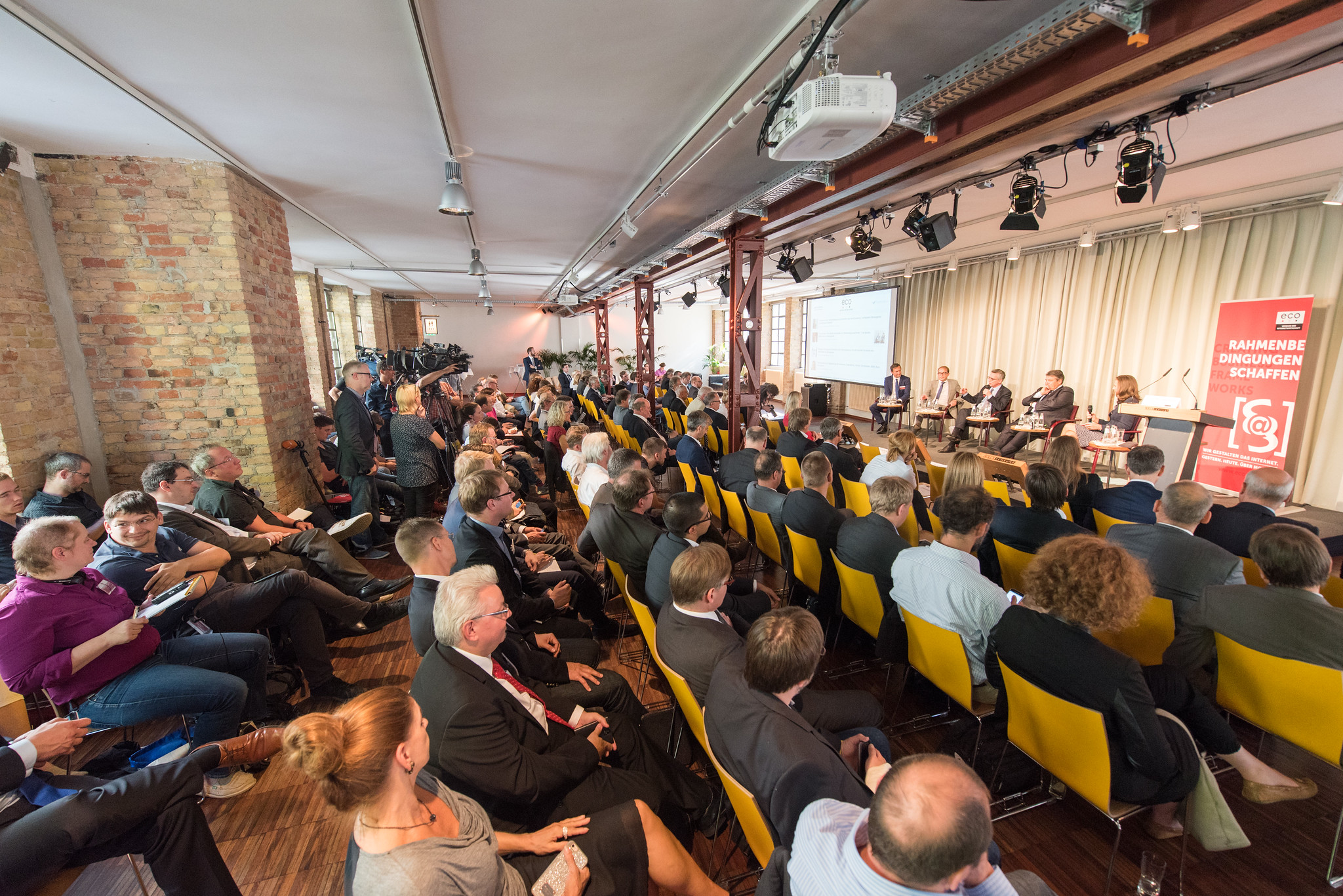
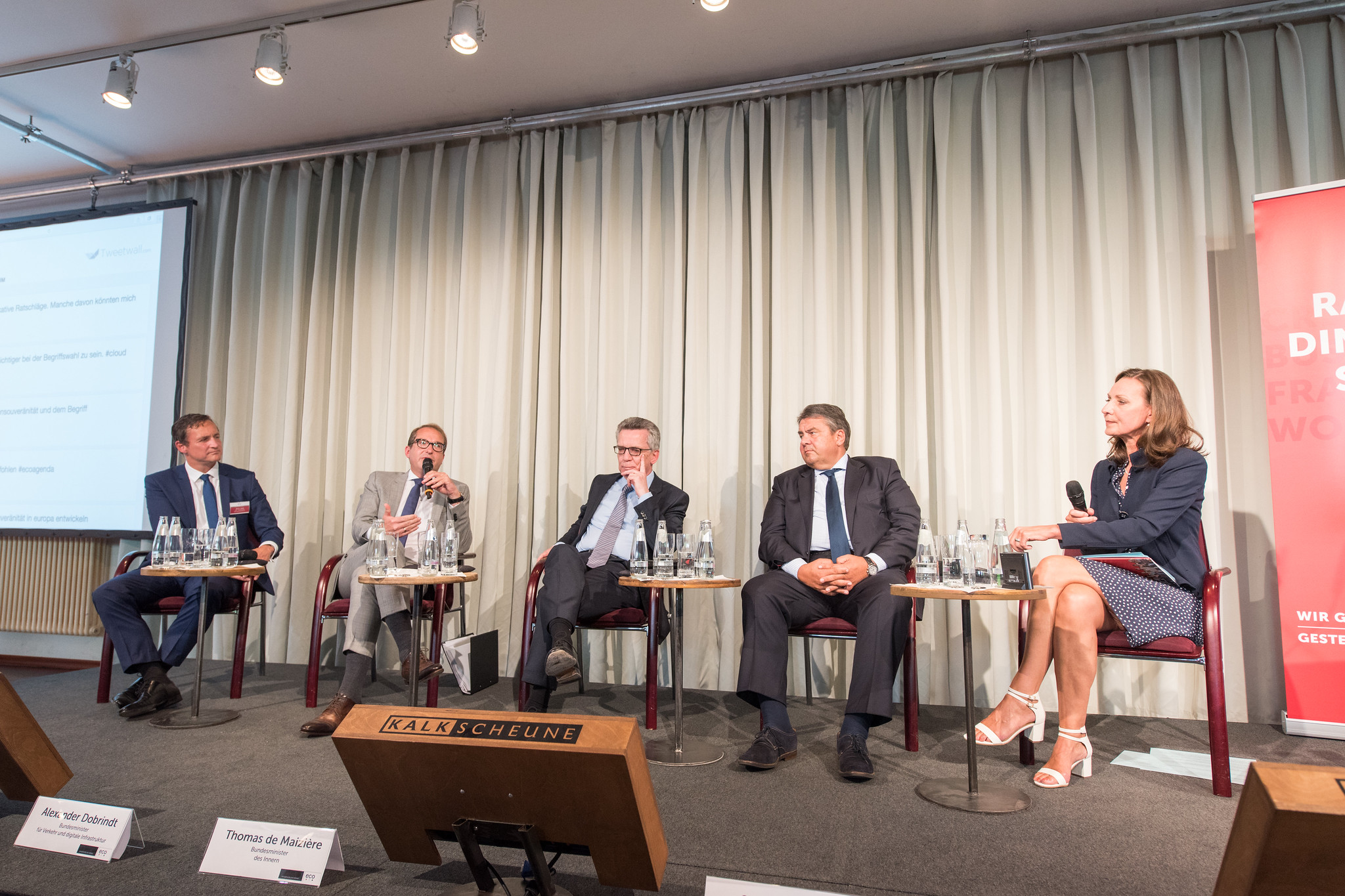
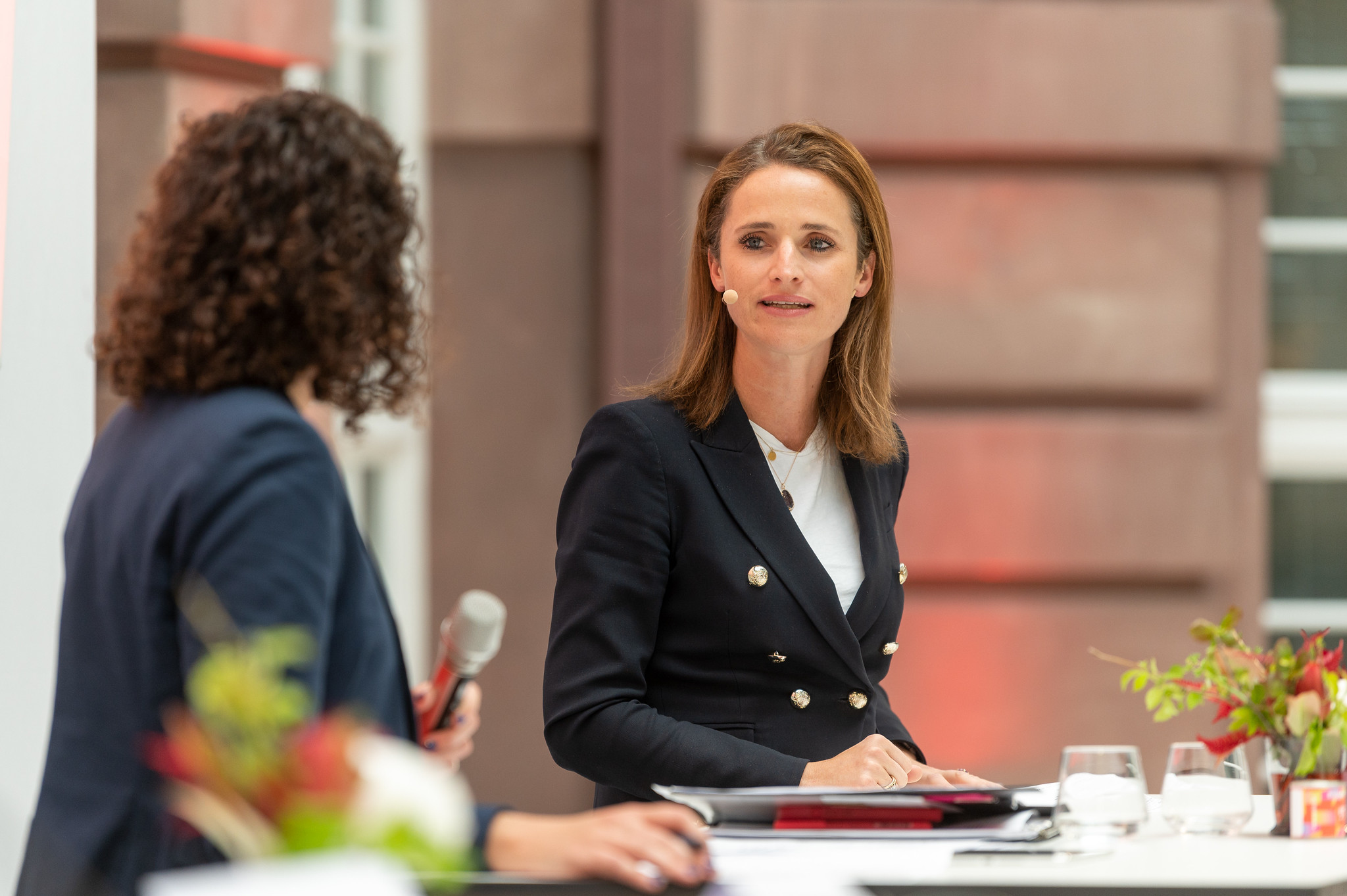
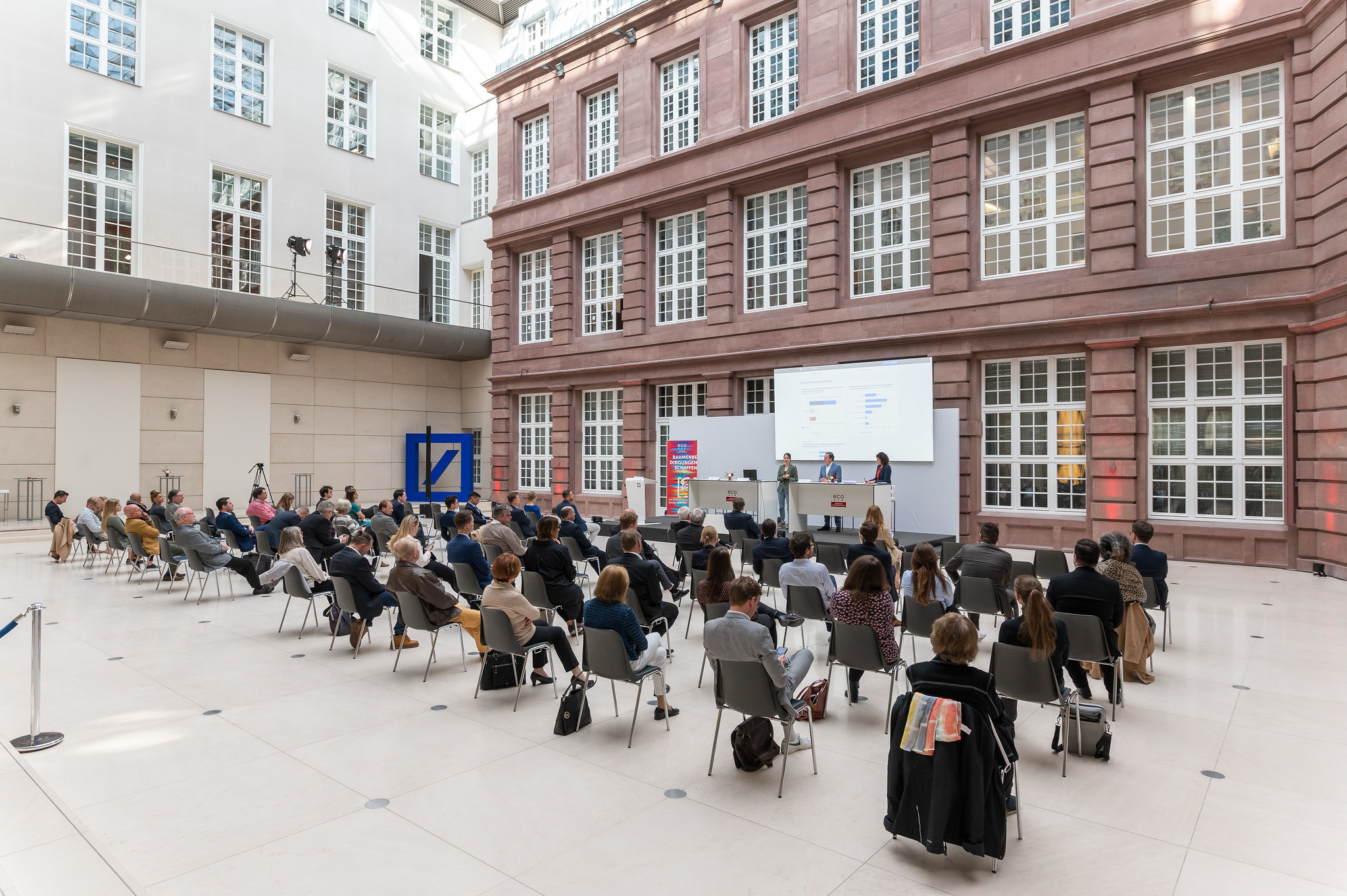
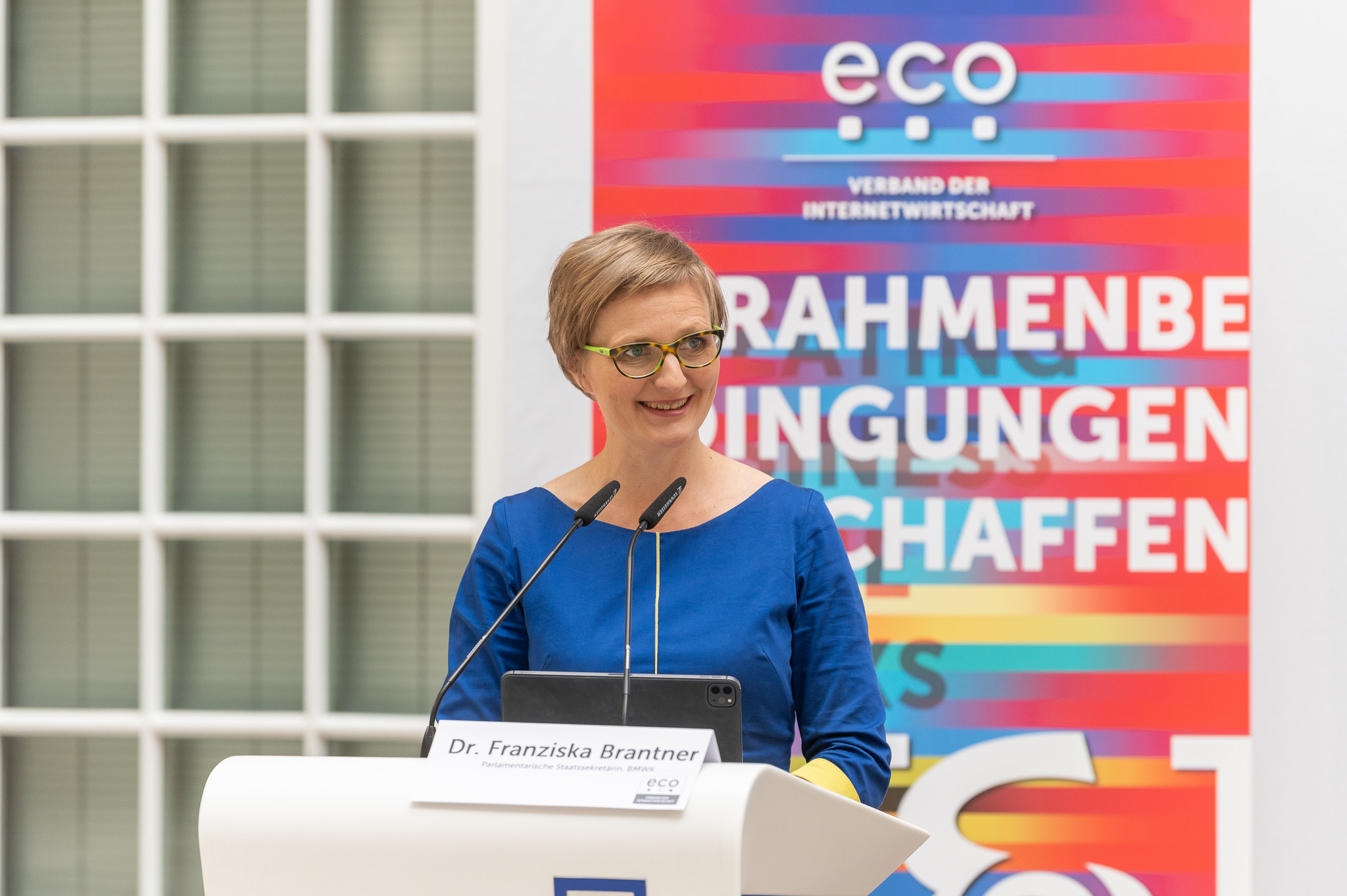
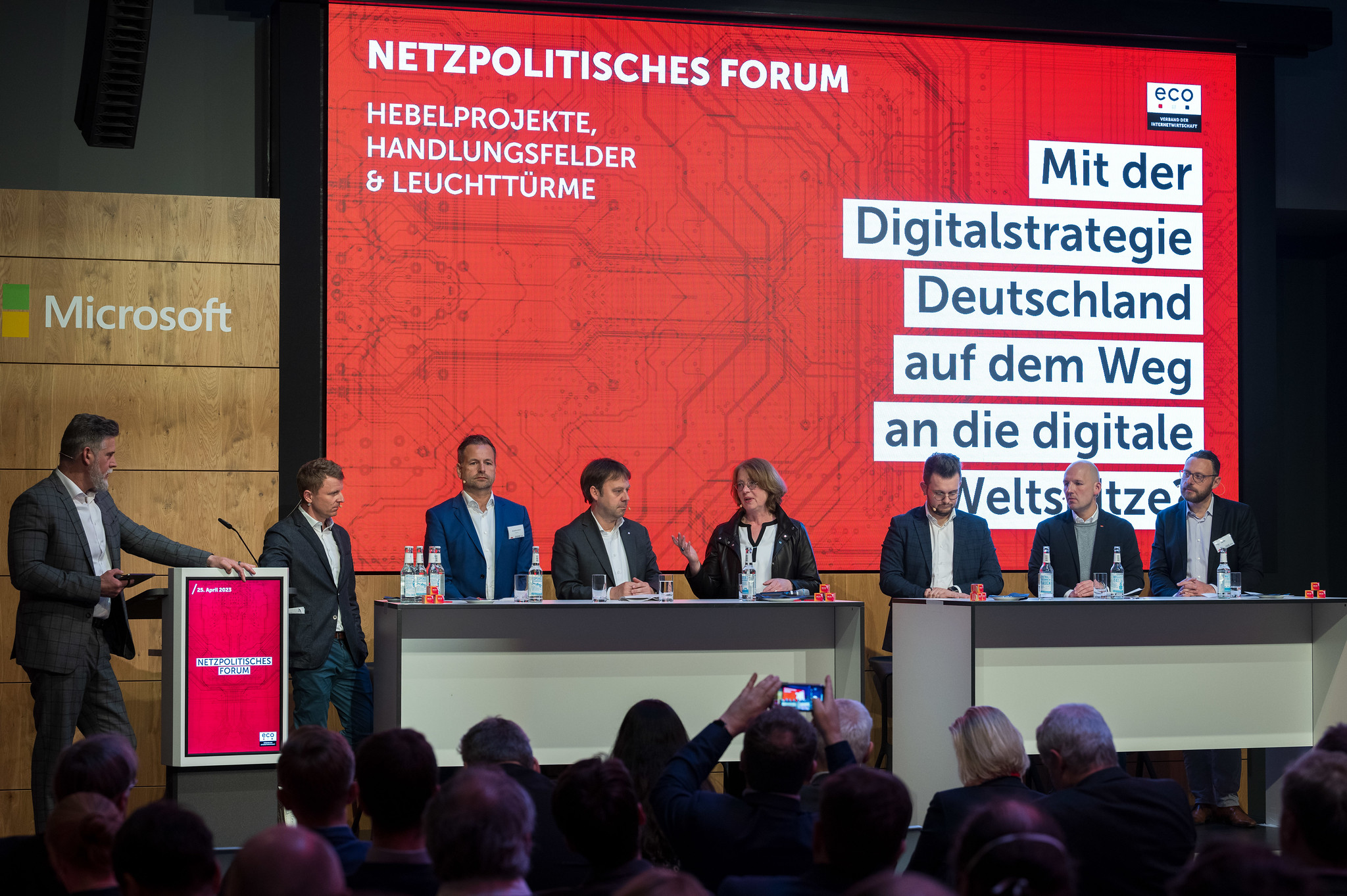
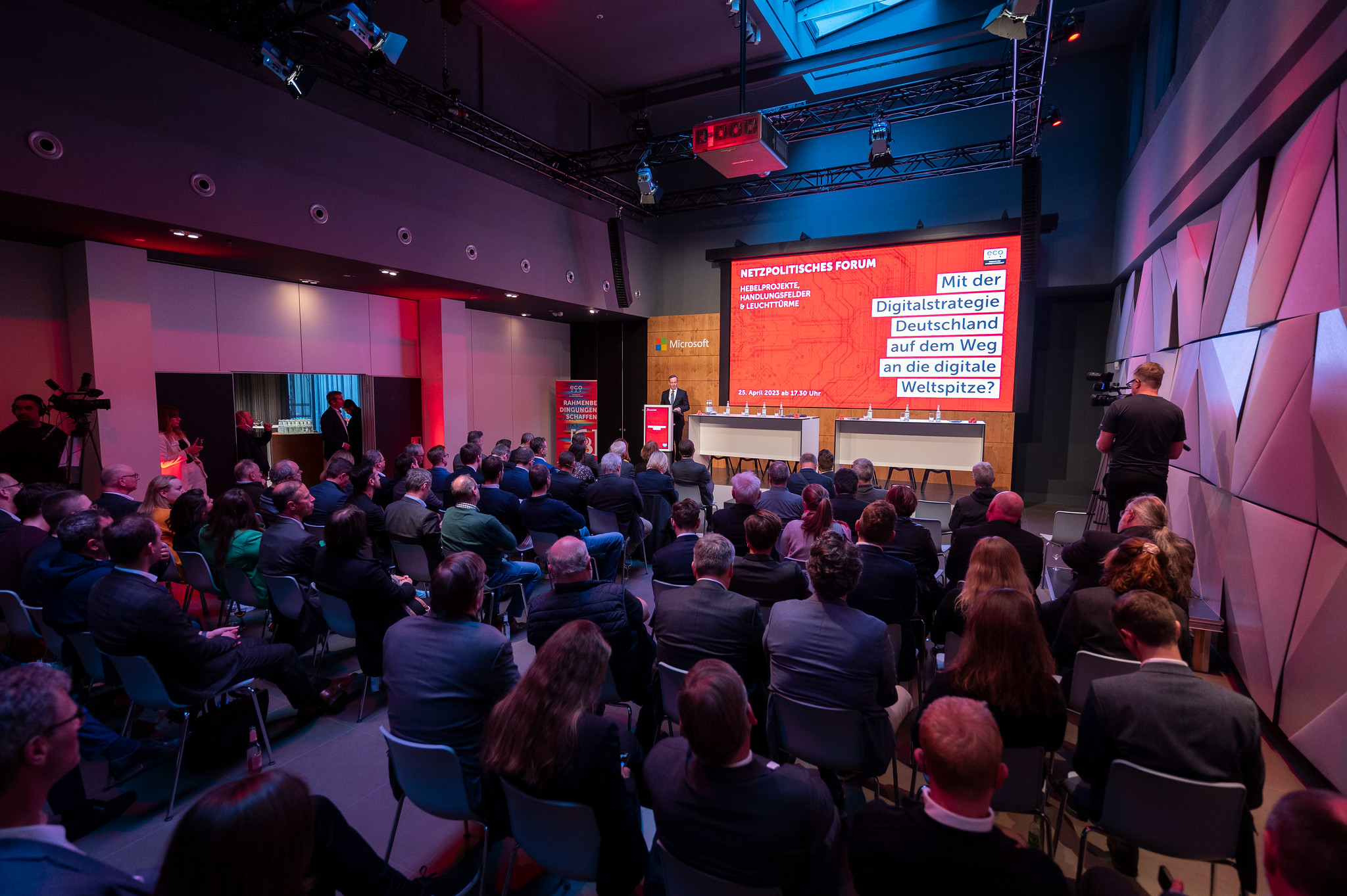
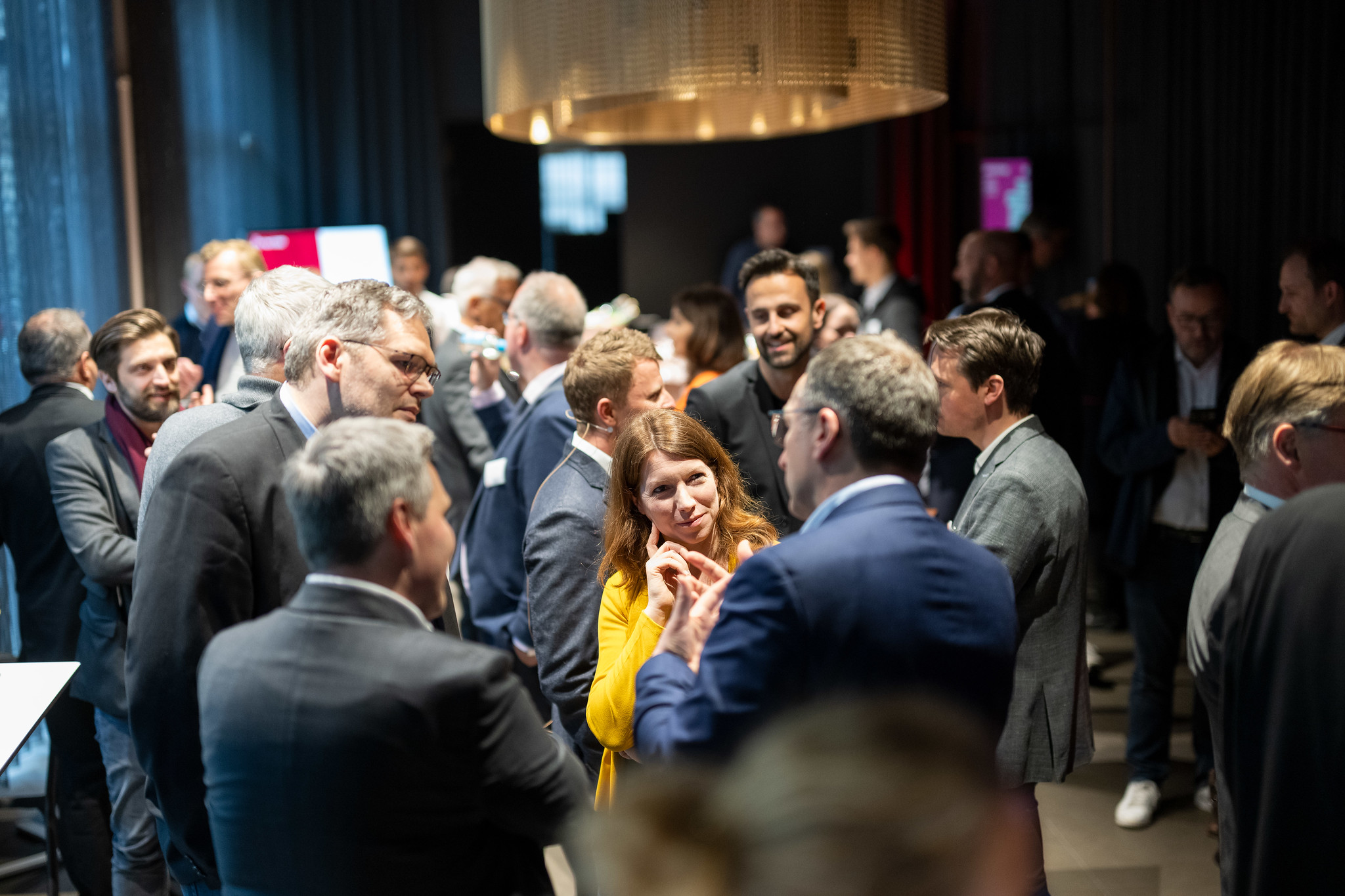
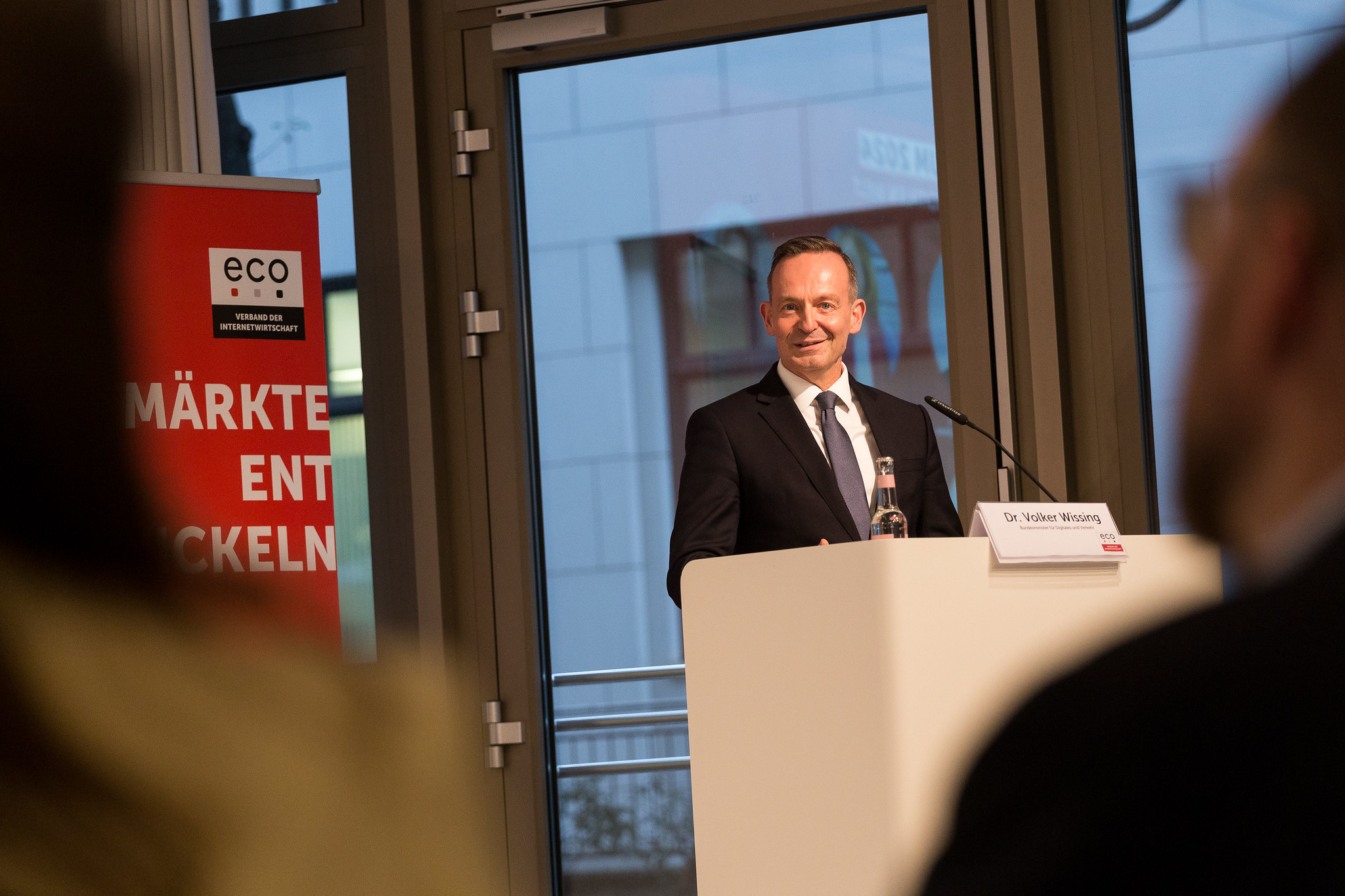
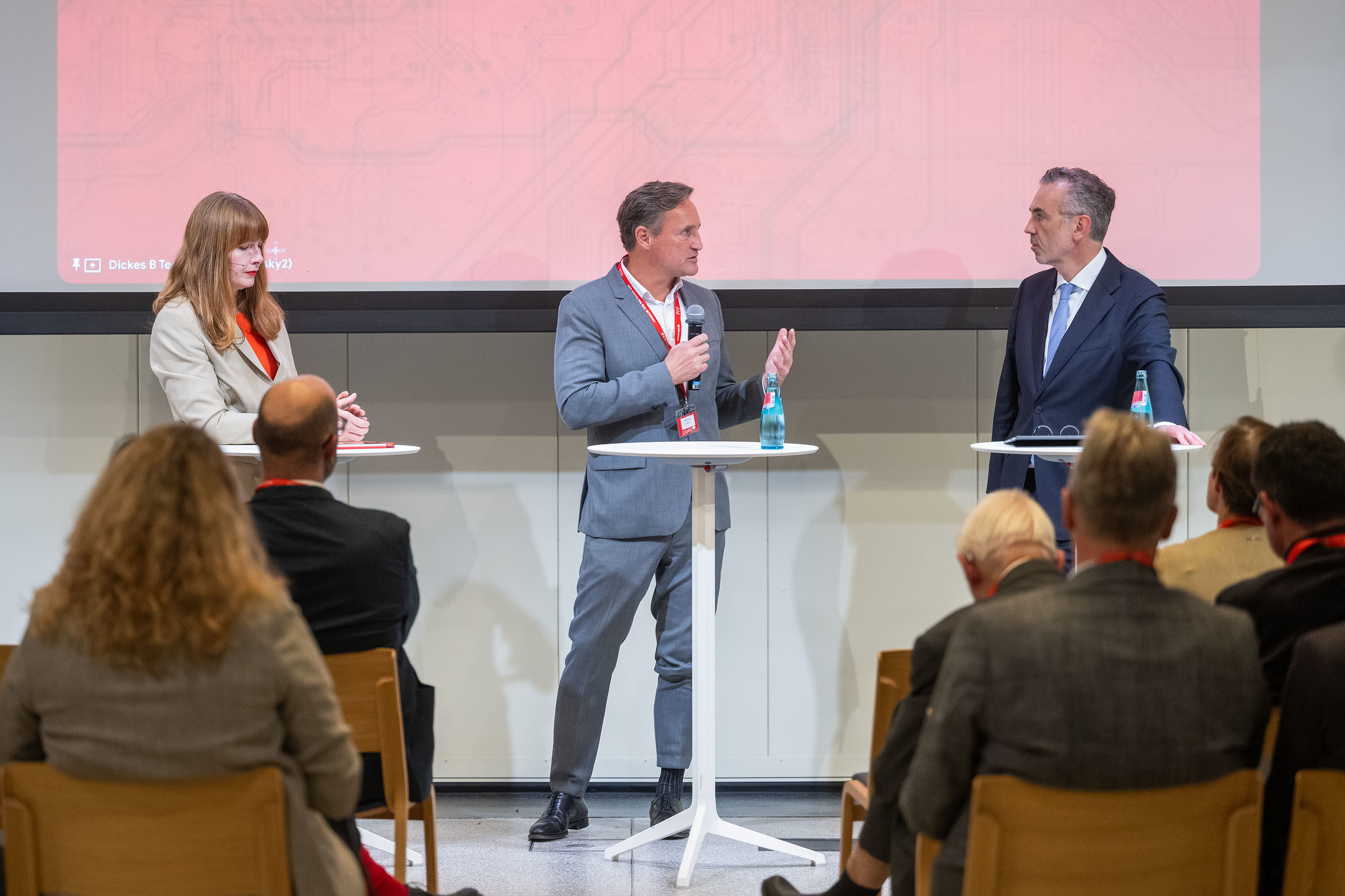
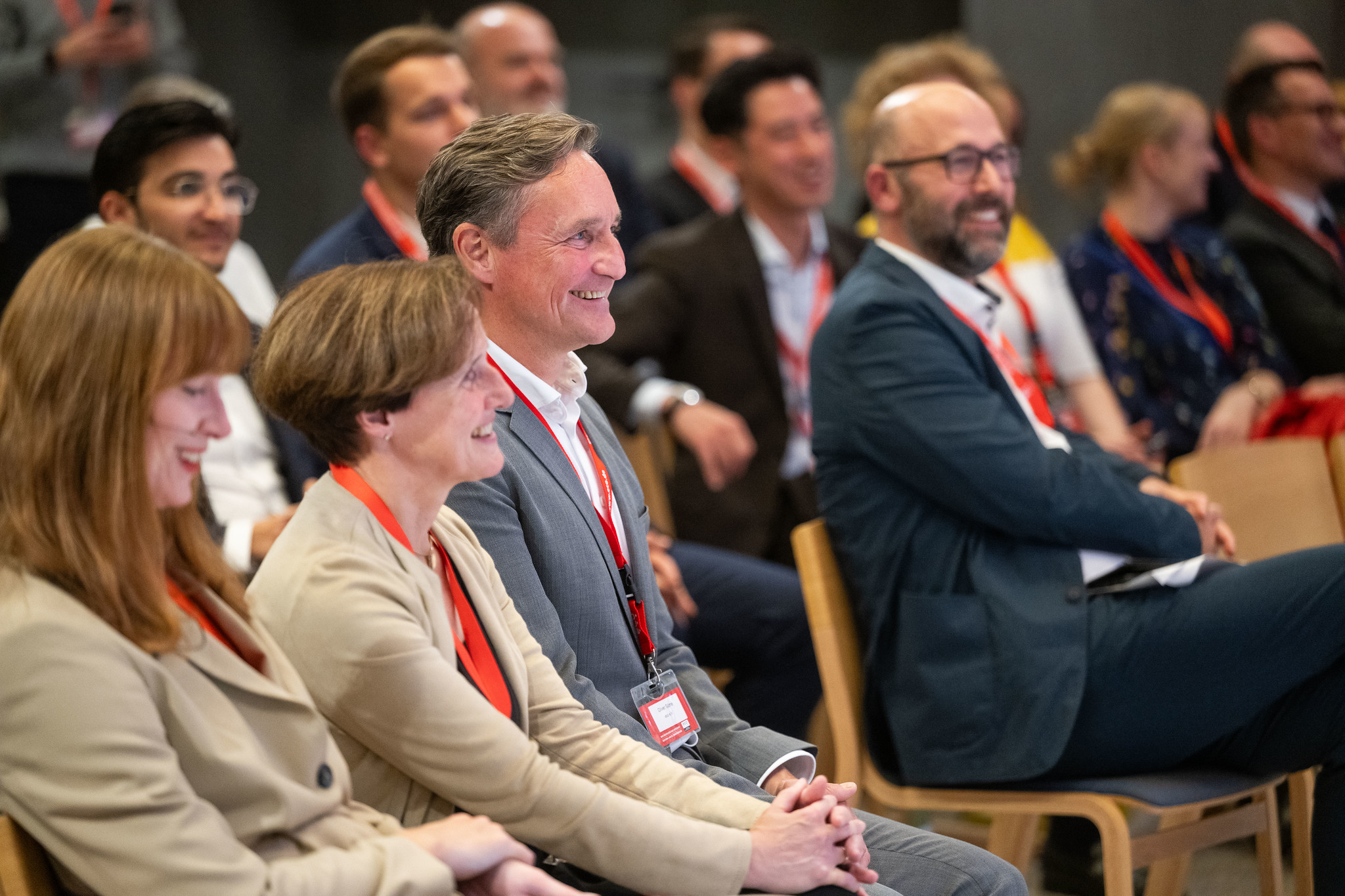
Since 2016, eco’s Internet Policy Forum has brought together leading voices from politics, industry, academia and civil society to discuss the key issues surrounding digitalisation. Three federal ministers – Thomas de Maizière, Sigmar Gabriel and Alexander Dobrindt – were guests at the very first event. In the years that followed, Peter Altmaier, Dorothee Bär, Franziska Brantner and Volker Wissing, amongst others, took to the Forum’s stage.
The topics discussed also reflect a decade of development in digital policy. From the German federal government’s Digital Agenda through digital infrastructure, sovereignty and security to sustainability and Germany’s digital strategy, the Forum has addressed key debates of its time. In 2026, the Internet Policy Forum will take place for the tenth time and, under the motto “Digital Germany 2030: How Digitally Ready Is Germany?” , will once again focus on Germany as a digital location. Speakers are expected to include Federal Minister for Digital Affairs Dr Karsten Wildberger, Federal Minister of Justice Dr Stefanie Hubig and Britta Behrendt, Head of Department at the Federal Chancellery.
In this interview, eco’s Managing Director Alexander Rabe looks back on the format’s beginnings, ten years of Internet policy dialogue and the coming years of digital policy.

Ten years ago, eco launched the Internet Policy Forum. What was the original idea behind the format?
The first Internet Policy Forum was a first not only for eco, but also for German digital policy as a whole. As we recall, following the conclusion of the “Internet and Digital Society” study commission, a Digital Agenda for Germany was adopted for the first time in 2014. Those responsible at the time were German Federal Minister for Economic Affairs Sigmar Gabriel, Federal Minister of the Interior Thomas de Maizière and Federal Minister for Transport and Digital Infrastructure Alexander Dobrindt.
Although two years had already passed since the publication of this Digital Agenda by the time the first Internet Policy Forum took place, the three ministers responsible had never appeared together in public. Consequently, there had also been no joint public discussion of plans, progress and successes – but also of the challenges involved in implementation.
That is precisely what we fundamentally changed with the first Internet Policy Forum. And that was important. After all, at the highest political level, the Internet was still being described as “uncharted territory” in 2013.
The Internet Policy Forum thus became a place where we, as the Internet industry, could engage directly with political decision-makers on pressing digital issues. The fact that we have continuously developed and deepened this dialogue with ministers, state secretaries and Members of the German Bundestag over the years shows that the format has proved its worth and is now one of Germany’s defining platforms for exchange on digital policy.
Ten years have meant many debates, encounters and political upheavals. Which moment or discussion at the Internet Policy Forum has particularly stuck in your memory?
I still remember some of the remarks from the early years very well. From today’s perspective, some of them seem genuinely bizarre. For example, there was a comment along the lines of: “Cloud sounds a bit like ‘stealing’ – surely something has to be done about that.”
Statements like that show just how limited technical understanding was in many quarters back then – and, unfortunately, in some cases still is today. Complex technological issues were not infrequently overshadowed by spontaneous remarks seemingly designed to attract public attention. That helps neither the debate nor the creation of sound political frameworks.
That is precisely why I value the exchange at the Internet Policy Forum so highly: it also provides an opportunity to put issues into their proper expert and technical context. Only when policymakers better understand technological developments can they create rules that enable innovation rather than hinder it.
I also remember the reaction to the call for a Ministry for Digitalisation, which was dismissed as something of a “fetish” at the first Internet Policy Forum. It is therefore all the more encouraging that this idea has since developed into an actual ministry. This at least reduces some of the friction in political work – even if there is still a great deal to be done.
What makes the Internet Policy Forum so special to this day?
Besonders ist für mich vor allem die Kombination aus hochrangiger Besetzung, echtem Austausch auf Augenhöhe und einem interdisziplinären Miteinander.
For me, what makes it particularly special is the combination of high-level participants, genuine dialogue on an equal footing and interdisciplinary exchange.
How has the importance of Internet policy issues in politics changed since the first Forum?
On the one hand, it is sobering that we are still discussing some of the same issues today as we were ten years ago. On the other hand, the importance of Internet policy and digital policy issues in politics has changed significantly.
There is now much broader recognition of just how crucial the digital transformation is for Germany as a business location. The importance of digital technologies as a whole has also become considerably more visible – not least because of the rapid rise of artificial intelligence. Digital policy has moved much more firmly into the political spotlight, which is also reflected institutionally, for example through the creation of a dedicated digital ministry and a lead parliamentary committee on digital affairs.
At the same time, however, certain political issues keep resurfacing: data retention, the handling of vulnerabilities and zero-day exploits, or questions surrounding illegal content on the Internet. It is precisely in these areas that I would like to see greater socio-political and technological expertise. This also includes recognising that we need to promote computer science and media literacy much more extensively across the board.
The 2026 Internet Policy Forum6 is themed “Digital Germany 2030 – How Digitally Ready Is Germany?”. What can participants expect this year?
Once again this year, participants can expect a high-level Forum featuring relevant voices from politics, industry and digital practice. The central question is: How far have we actually come on the path towards a digitally future-proof Germany – and what is still standing in the way of the digital transformation?
We will discuss where Germany stands today in terms of its digital readiness – both in public administration and in the digital transformation of organisations ranging from SMEs to DAX-listed corporations – what progress has been made, and where we are still falling short of our potential. After all, the benefits of the digital transformation and its potential for productivity, innovation and modernisation have long been recognised. What matters now is clearly identifying the obstacles and systematically removing them.
The German federal government has committed to cutting red tape, reducing reporting obligations and embracing the digital transformation as a genuine opportunity. That is precisely what it must be judged by.
Now, to borrow the words of a former Secretary-General of the CDU, the current governing party, it is time to get things done – in other words: do, do, do.
What are your hopes for the Internet policy debate over the next ten years?
Fewer repetitions, more substantive progress.
I would like to see a debate that is open to technology, conducive to innovation and, at the same time, societally responsible. In Germany, we need more courage, more expertise and more determination to take action – in politics, but also in society as a whole. Digital policy must no longer be primarily reactive; instead, it must actively shape the future.