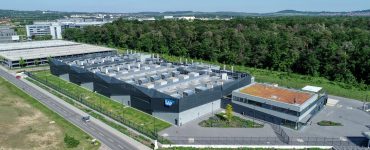
AI applications, industrial real-time processes and data-intensive services are fundamentally transforming the requirements for digital infrastructures. Fibre optics remain the foundation; however, proximity to computing power is becoming increasingly decisive. In an interview, Lutz Lohse, Managing Director of enviaTEL, explains why edge data centres in particular are becoming a strategic building block: they enable local data processing, reduce latency and create economic added value for industry and municipalities. As a result, the regional network operator is evolving from a pure infrastructure provider into an active platform for digital value creation. He will be speaking at fiberdays 26 at the eco Datacenter Plaza.
For a long time, fibre optics were regarded as the mere foundation of digital networks, often described as a so-called “dumb pipe”. When we talk today about AI applications or real-time processes in industry, how is the role of a regional network operator changing into that of an enabler for edge computing, and why is pure fibre optic rollout no longer sufficient?
As a regional telecommunications service provider for private and business customers, we have observed a significant increase in real-time data streams for years. In the private sector, usage patterns in video transmission and gamification have grown dramatically. In the age of machine-to-machine communication, our customers are establishing sensor-controlled automated production chains. For all these applications, low latency is the new currency. With DE-CIX Leipzig on our data centre campus, our customers benefit from the lowest-latency Internet connections to regional and global networks.
Edge colocation brings computing power to where data is generated. What specific economic benefits do your customers see in this local approach, for example with regard to on-site processing speed?
The data is generated at our customers’ sites. The decisive factor is the processing of the data with the host, either on premise or in a nearby certified edge data centre. envia TEL operates these edge data centres. They provide our customers with a highly available operating environment while ensuring compliance with obligations under critical infrastructures (KRITIS) and NIS 2 legislation. The second key advantage of edge data centres is that our customers do not have to invest in the infrastructure, personnel or operational services of an edge data centre. We have already made these investments and, thanks to economies of scale, can offer the best possible services.
Operating decentralised edge data centres is significantly more complex than running a single large site. In your view, what are the biggest operational challenges in reconciling highly available data centre standards with regulatory requirements and energy conditions across different regions?
Operating edge data centres is not more complex if they are identical in design and equipped with identical infrastructures. Scalability provides a decisive resource advantage. This also applies to personnel and the monitoring of edge data centres through highly automated processes. Here, the integration of AI offers crucial opportunities for the future. The potential is by no means exhausted. A further opportunity for the future lies in unlocking the energy efficiency potential in the regions. Supplying tenants and businesses with heat from data centres in the future is a sustainable asset that we both want and need to harness.
Regional fibre optic networks are increasingly taking on more than pure transport functions. In your view, at what point does the combination of a regional backbone and local edge data centres become a strategic control centre that determines how attractive a region remains for modern industry and digital services?
Our advantage is that we have all products on the shelf. This includes fibre optic products, edge data centres, security solutions and global connectivity via DE-CIX Leipzig. This performance capability, combined with green energy, represents a decisive locational advantage for our region. We are rooted in the region and can only perform well if our customers, municipalities and partners do so as well. Developing what is best for the region as a whole is what drives us.
With regard to your panel: What is the one key question that IT managers and municipal decision-makers should be asking themselves today in order not only to invest in passive infrastructure, but also to build a long-term, sustainable edge strategy?
The question is not whether, but when and how well structured, cost-effective and sustainable a company should move into a data centre. Each company must assess this decision for itself. The legal framework provided by the KRITIS umbrella law and NIS 2 legislation constitutes essential requirements for the use of a data centre. As an entrepreneur, I should clarify how, with which resources and with what implications I can continue to operate my IT on premise.