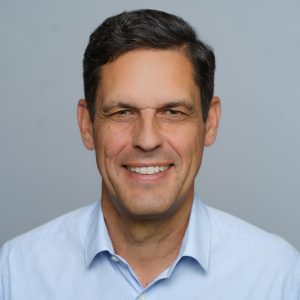
New eco member NEXOWARE positions itself as a software partner for IT service providers in the DACH region and focuses on a fully integrated IT process landscape. In this interview, CEO Dr. Oliver Mauss explains what the NEXOWARE Group stands for, which challenges currently shape IT service providers and system integrators, and what role integrated approaches such as NEXOWARE Connect play in this context. He also provides insights into the use of artificial intelligence and assesses which developments will significantly influence the IT service provider market in the coming years.
NEXOWARE brings together several software specialists under one roof and is clearly aimed at IT service providers. How would you describe what NEXOWARE stands for and what are your main content priorities?
NEXOWARE stands for the bundling of specialised software expertise along the entire IT value chain of IT service providers. Our goal is to provide system integrators, MSPs and IT service providers with a consistently usable software landscape: from commercial processes to service and ticket management through to document and output management and automation solutions.
In terms of content, we focus on three central themes: seamless integration, consistent automation and the targeted use of artificial intelligence in the day-to-day operations of IT service providers. We deliberately rely on independent software solutions developed in Europe that are oriented toward the real requirements of medium-sized IT service providers.
Many IT service providers, including system integrators, work with long-established tool landscapes. What do you most frequently observe in dealing with these structures?
We often see historically grown tool landscapes that have emerged from individual decisions. These systems are usually insufficiently integrated and lack clearly defined, cross-tool use cases. At the same time, existing legacy solutions as well as changing requirements for modern business models are often not consistently developed or taken into account.
At the same time, economic and organisational pressure on IT service providers is increasing: a shortage of skilled workers, margin pressure and rising customer expectations make inefficient processes increasingly difficult to sustain. Many companies know that they need to modernise their tool landscape, but shy away from the integration effort or the replacement of proven systems. This is exactly where we come in with NEXOWARE.
With “NEXOWARE Connect”, you address the idea of a fully integrated software landscape. What does “seamlessly integrated” mean to you in concrete terms, and how do IT service providers notice the difference in their daily work?
For us, “seamlessly integrated” means that data and processes work together across systems, bidirectionally and along real use cases. Specifically, this means that on the one hand, we rely on a clear API concept, and on the other hand, we deliberately implement cross-tool use cases that are directly reflected in the daily work of IT service providers.
Since we have holistic control over the development of our tools, we can align functionalities with each other from the outset and don’t “dock on” integrations after the fact, but consider them conceptually from the beginning. With NEXOWARE Connect, we thus create an integrated software landscape in which no individual interface projects are required.
We are continuing to develop this concept for the future: from 2026, we plan to transition to a software bus architecture in order to become even more scalable and to be able to flexibly connect additional tools. In addition, the NEXOWARE Connect roadmap includes an MCP client/server concept and single sign-on to further improve integration, security and user experience.
IT service providers notice the difference very clearly in their day-to-day work: An order from the eShop is automatically processed in the ERP system, resulting in a ticket; services are recorded in the service process and flow directly back into billing and documentation. This eliminates manual intermediate steps, significantly reduces sources of error and makes processes noticeably more efficient.
AI is playing an increasingly important role. In your view, which tasks in the IT service provider environment are particularly suitable for the use of artificial intelligence?
Tasks that are currently highly manual, repetitive or knowledge-intensive are particularly suitable. These include the automatic categorisation and prioritisation of tickets, the analysis of similar cases, suggestions for solutions or support in first-level support. Due to its high complexity and the large amount of publicly available information, the IT sector is ideally suited for the use of AI.
In addition, we see great potential in workflow automation, billing verification and proactive service management. What is crucial for us is that AI is not used in isolation, but is directly integrated into existing processes.
In your opinion, which developments in the IT service provider market, especially for system integrators and MSPs, will have the greatest impact on internal processes in the coming years?
In the coming years, the pressure for standardisation and automation will continue to increase. Managed services, recurring revenue models and high service quality must be implemented with limited human resources. The shortage of skilled workers will remain a permanent issue.
In order to secure their business model, IT service providers will increasingly need to rely on automation and AI to relieve processes and make them more efficient. At the same time, the intelligent linking and evaluation of data from different systems is becoming increasingly important. Integrated software landscapes and a high degree of automation will thus become decisive competitive factors for system integrators and MSPs.