- The first website laid the foundations: today, digital transaction and platform models, the strongest industry segment, generate just under 40 per cent of the Internet industry’s revenue
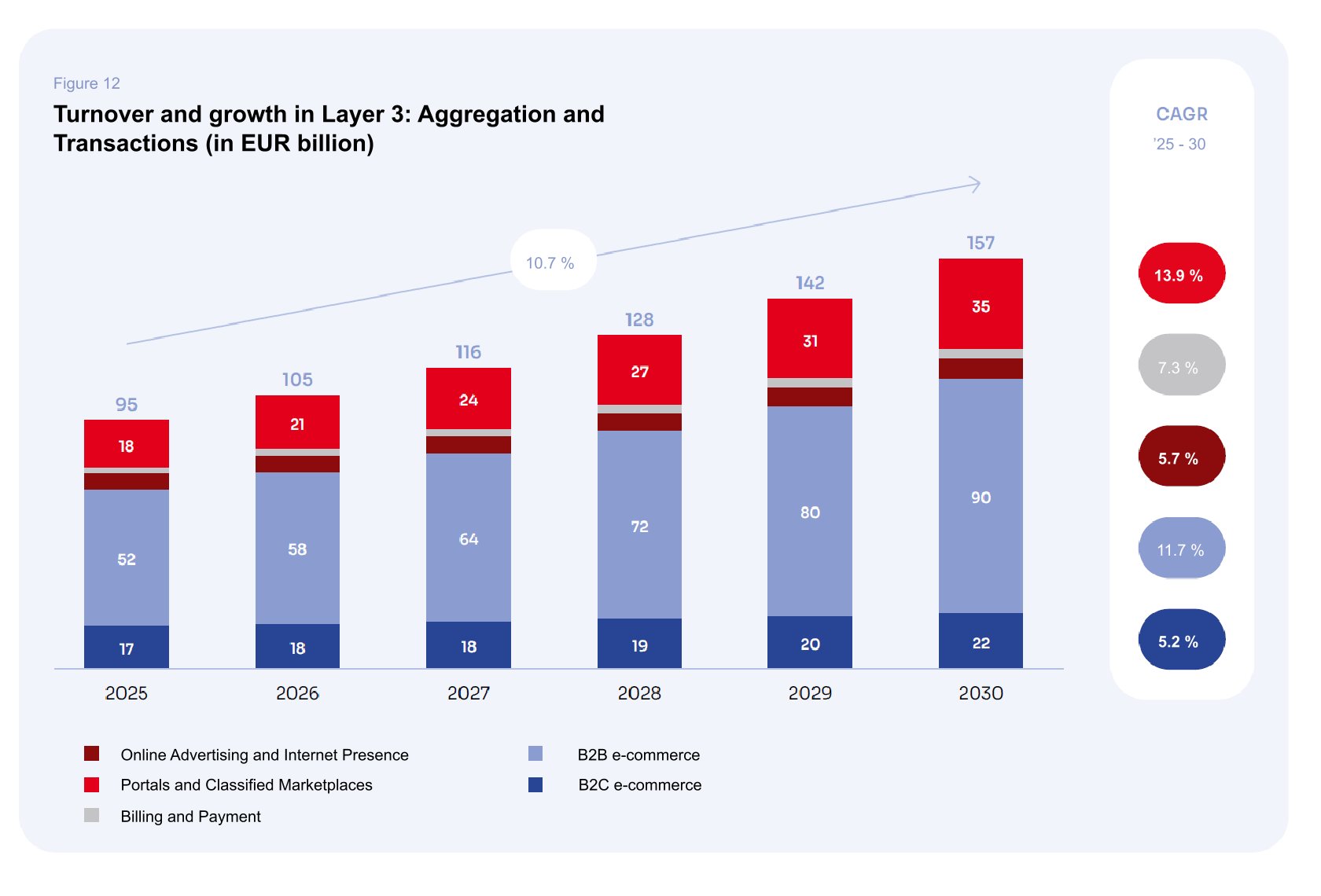
- B2B and B2C e-commerce alone generated combined revenue of around EUR 68 billion in 2025 – this figure is expected to rise to around EUR 112 billion by 2030
- Guidance for consumers: eco Association provides 5 tips for identifying trustworthy websites
Thirty-five years ago, on 6 August 1991, the World Wide Web was presented to the general public for the first time. The first website created by the CERN research centre went online that day and explained how the web worked. Since then, the Internet has developed rapidly: according to recent surveys, there are now around 1.5 billion websites worldwide.[1][1]
“The first website marked the visible starting point for the commercial Internet,” says Andreas Weiss, Managing Director of eco – Association of the Internet Industry. “It demonstrated how the existing Internet could be used as an open, globally connected information space, thereby laying an important foundation for today’s e-commerce, digital platforms and other business models.”
The economic significance of the development initiated by the open web is illustrated by the eco study “The Internet Industry in Germany 2025–2030: Future Prospects for Digital Infrastructures“.[2] Produced in collaboration with Arthur D. Little, the study analyses key segments of the German Internet industry and their development up to 2030. According to the study, digital transaction and platform models, the strongest industry segment, generate just under 40 per cent of the German Internet industry’s revenue. B2B and B2C e-commerce alone generated combined revenue of around EUR 68 billion in 2025. This figure is expected to rise to around EUR 112 billion by 2030.
A company’s own website as an anchor in the digital economy
As the web has become increasingly commercially successful, digital sales and communication channels have also multiplied. Today, companies and public-sector organisations reach their target groups through websites, marketplaces, apps and social networks. Despite the many options available for establishing an online presence, an organisation’s own website continues to play a special role. Hosted under its own domain, it can be designed independently and operated without reliance on individual platforms.
“An organisation’s own website with its own domain is the digital anchor point for every company and public-sector organisation. It builds trust, makes offerings discoverable and enables direct contact on the Internet,” says Weiss. “In future, AI will help shape how information is created, structured and made discoverable on the web. An organisation’s own domain will remain a clearly identifiable point of reference.”
5 tips for identifying trustworthy websites
A large proportion of information, communication and commercial activity now takes place online. At the same time, a professional-looking website is not necessarily trustworthy. Consumers should therefore examine unfamiliar websites more closely and pay particular attention to the following features:
- Check the domain: A plausible, correctly spelt domain without unusual additions is a good first indication of a reputable website.
- Check the provider’s details: Transparent and professional websites make their legal notice, contact details, prices and returns policy easy to find.
- Use HTTPS: An encrypted connection ensures that personal data and payments are transmitted securely. Modern browsers can help by warning users about missing security standards or known fraudulent websites.
- Examine the payment methods: Trustworthy shops offer a range of buyer-friendly payment options.
- Look out for warning signs: Realistic prices, transparent communication without artificial time pressure, and plausible, consistent information all indicate a reputable offer. External review platforms and customer reviews provide useful additional guidance.
Sources