The Data Centre Expert Summit 2026
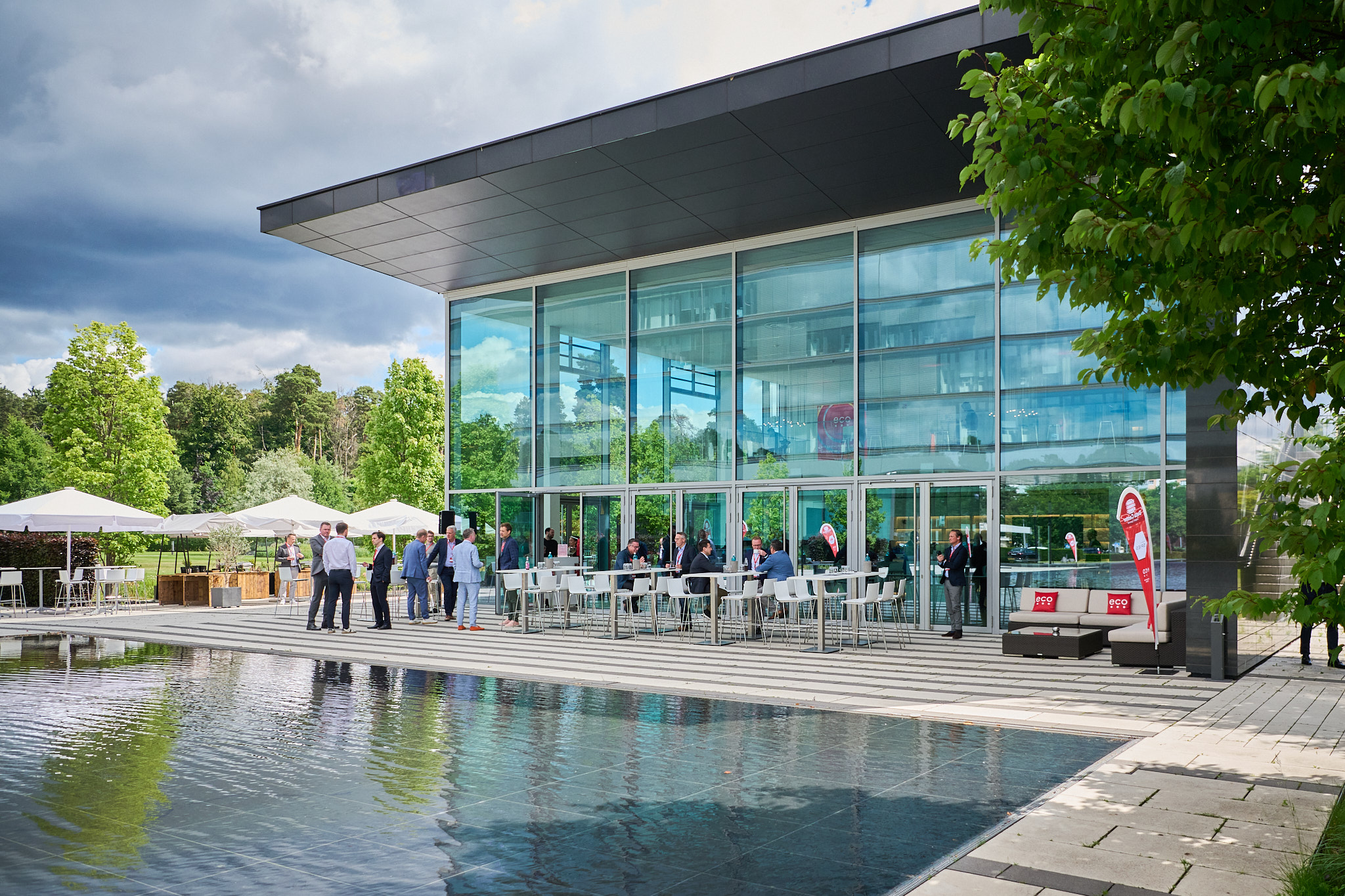
area3 in Dreiech
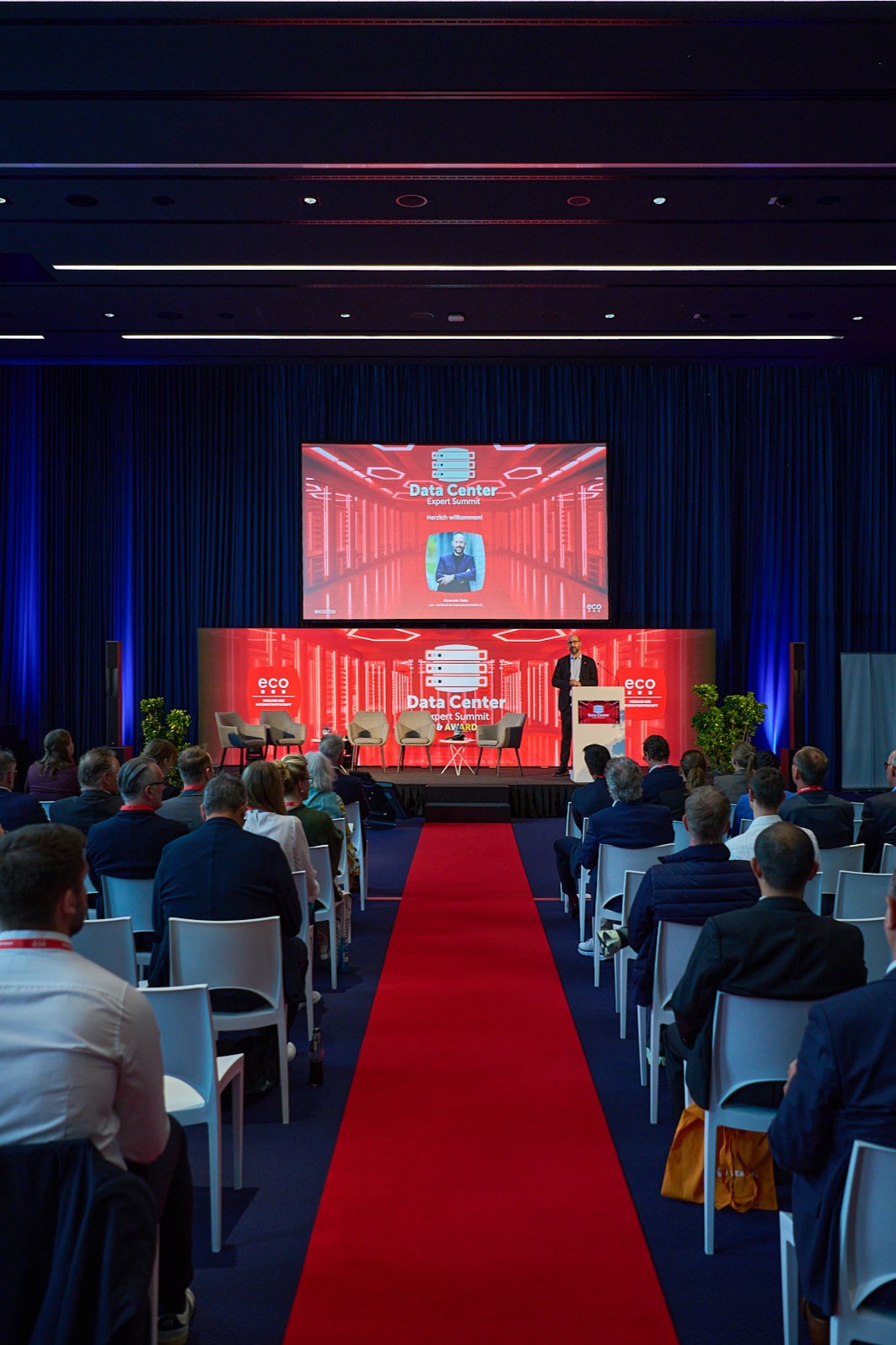
The 6th Data Centre Expert Summit 2026, held on 10 and 11 June at area3 in Dreieich, brought together experts from the data centre industry, the energy sector, planning, network infrastructure, politics and public administration. The focus was on key questions relating to the further development of digital infrastructure: How can the growing demand for capacity be financed and accelerated? What role do new locations beyond established markets play? And how can data centres become more resilient, sustainable and more closely integrated into energy and heating systems?
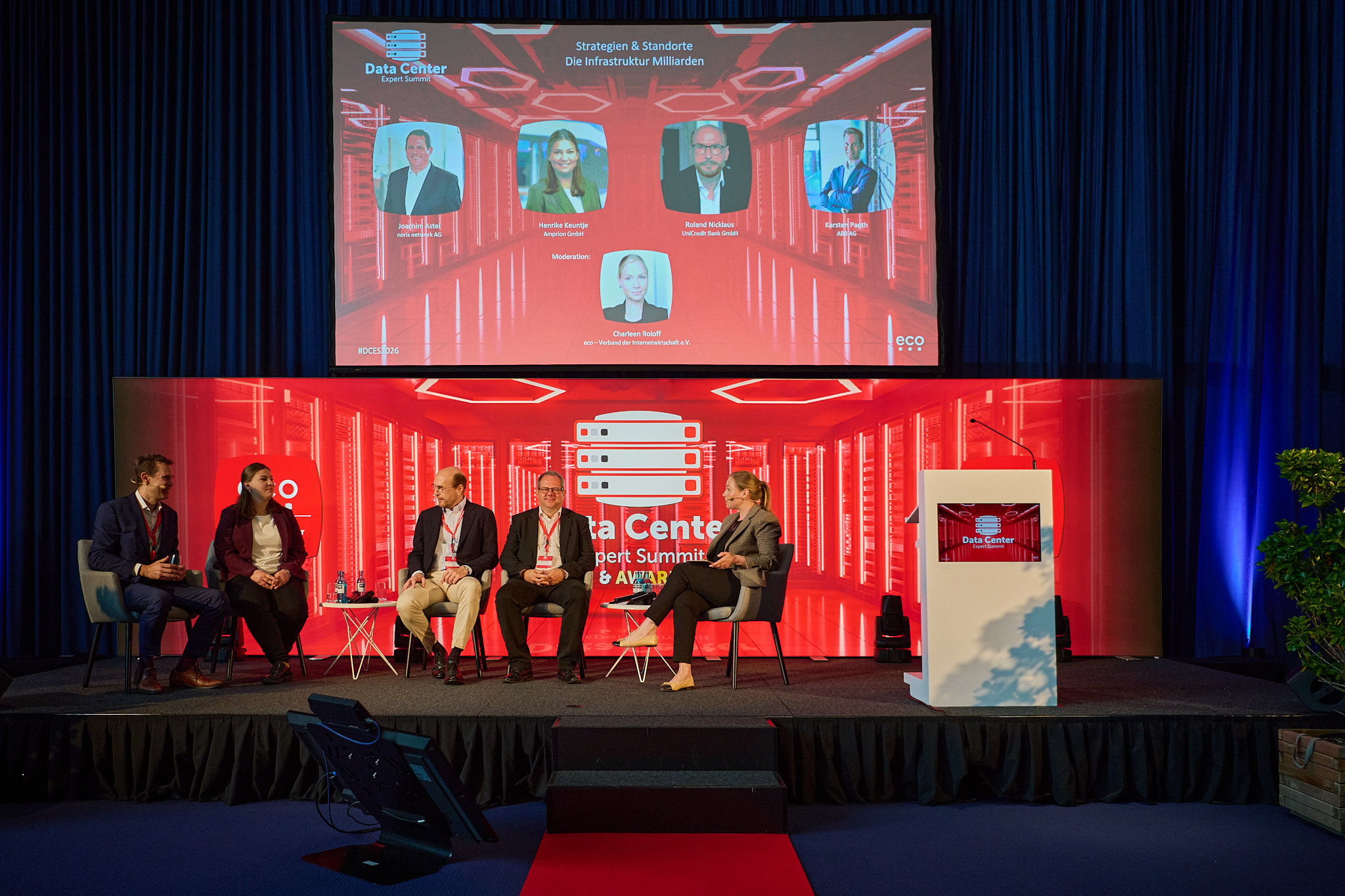
Panel: “Strategies and Locations – The Infrastructure Billions” with Karsten Paeth (ABB), Henrike Keuntje (Amprion), Roland Nicklaus (UniCredit Bank) and Joachim Astel (noris network), moderated by Charleen Roloff (eco).
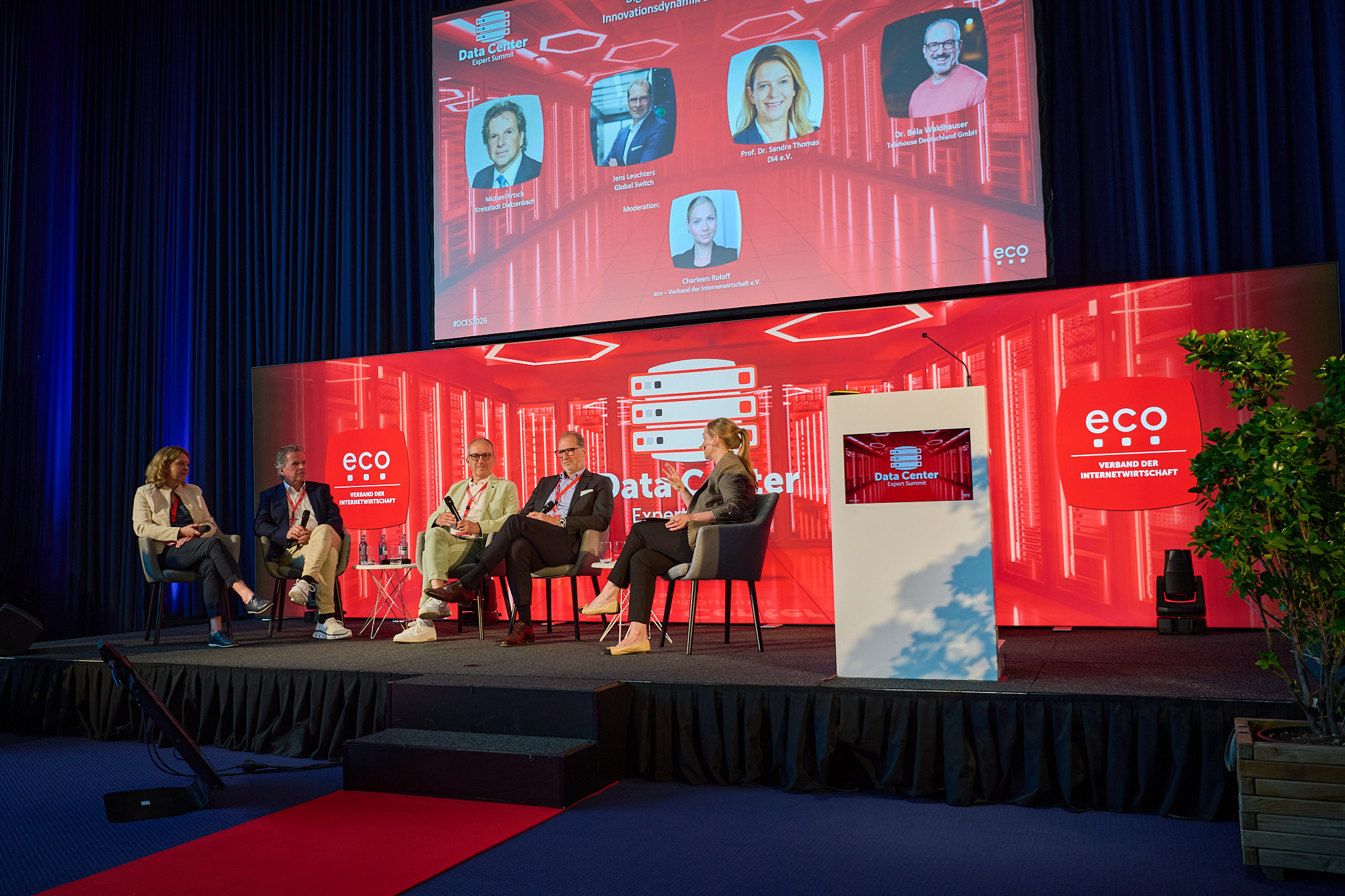
Panel: “Digital Ecosystems in Focus – Innovation Dynamics Using Hesse as an Example” with Dr Sandra Thomas (Di4 e.V.), Michael Krtsch (Dietzenbach Economic Development Agency), Dr Béla Waldhauser (Telehouse) and Jens Leuchters (Global Switch), moderated by Charleen Roloff (eco).
Market ramp-up and infrastructure requirements
A central topic was the growing demand for data centre capacity on a gigawatt scale, driven in particular by AI applications and data-intensive workloads. Discussions covered financing models such as REITs, private equity and bootstrapping, as well as the question of which regulatory and infrastructural conditions are necessary for a faster expansion of digital infrastructure.
The discussion also focused on new procedures and instruments, including the maturity-based procedure as an alternative to the first-come, first-served approach, as well as flexible grid connection agreements. Both approaches can help to better align grid connectivity, planning certainty and the speed of expansion. At the same time, it became clear that future power densities and new technical requirements – such as 800-volt direct current power supplies – will significantly change the planning and operation of data centres.
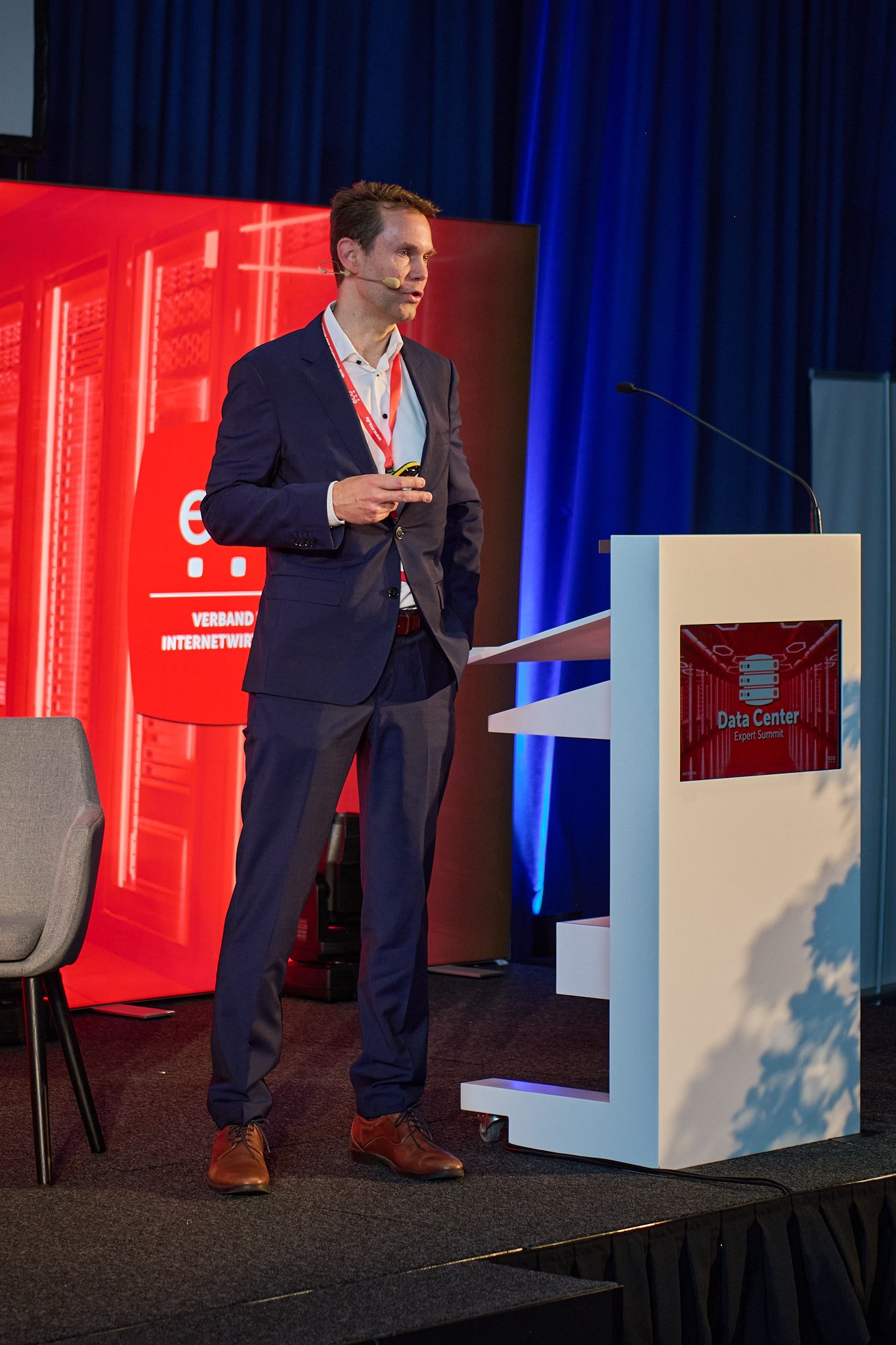
Karsten Paeth (ABB)
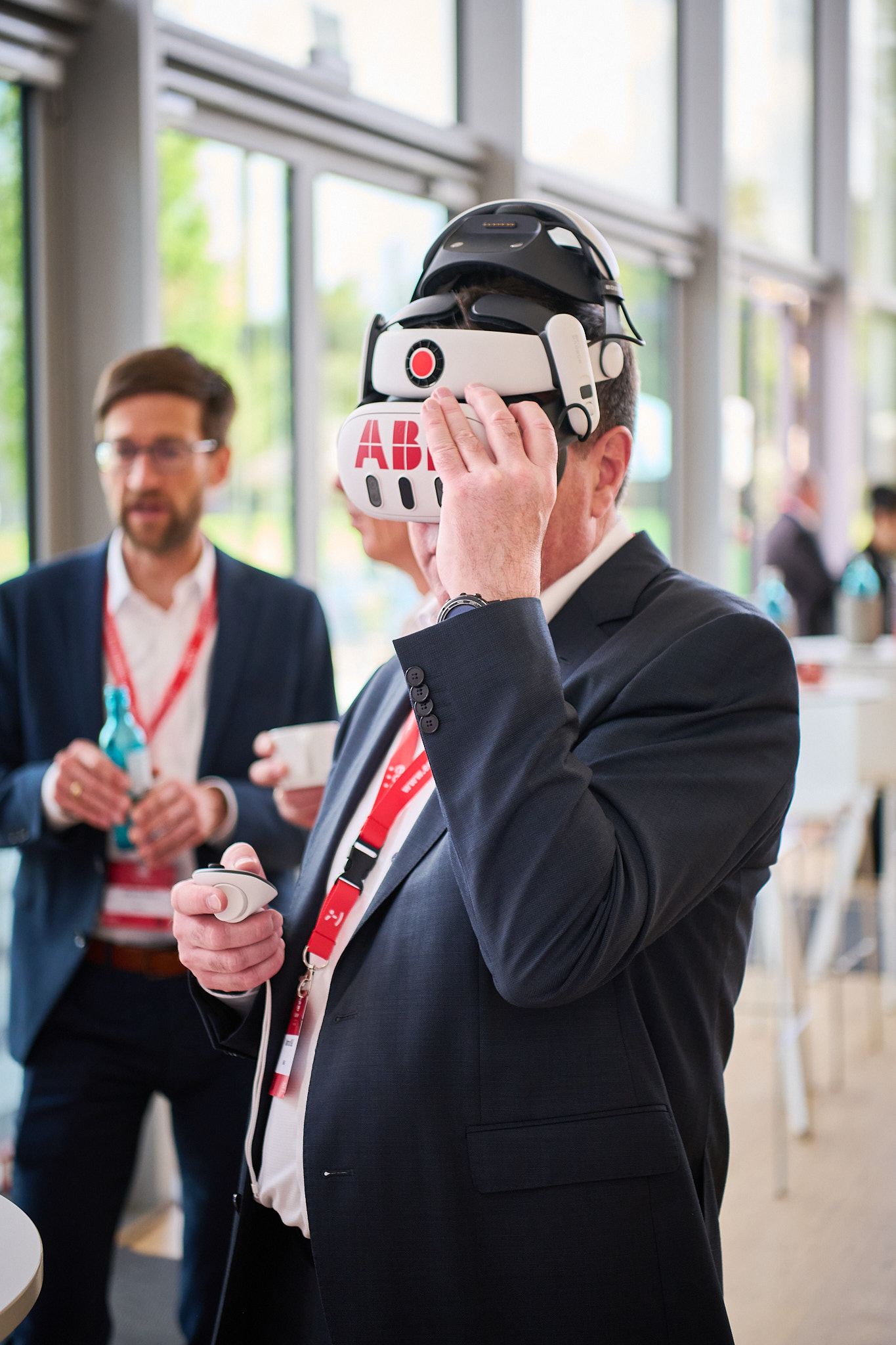
Networking
Jörg Karpinski (Huawei)
Partners
Location development and regional ecosystems
Using Hesse as an example, it became clear how closely location policy, energy supply, municipal planning and economic development are now intertwined in the expansion of digital infrastructure. Hesse’s guidelines for data centres, together with projects for utilising server waste heat – for instance, for residential areas in Dietzenbach – illustrate this development.
The focus was also on new data centre regions beyond the traditional FLAPD locations. It became clear that location decisions are increasingly driven by the availability of energy, fibre optic connectivity, land, planning certainty and regional acceptance. Examples from the Berlin surrounding area, the structural change region in the Rhineland and Austria showed how new digital hubs can emerge. The ALPSiX project in Carinthia was discussed as an example of a regional digital hub offering improved connectivity to Southern Europe.
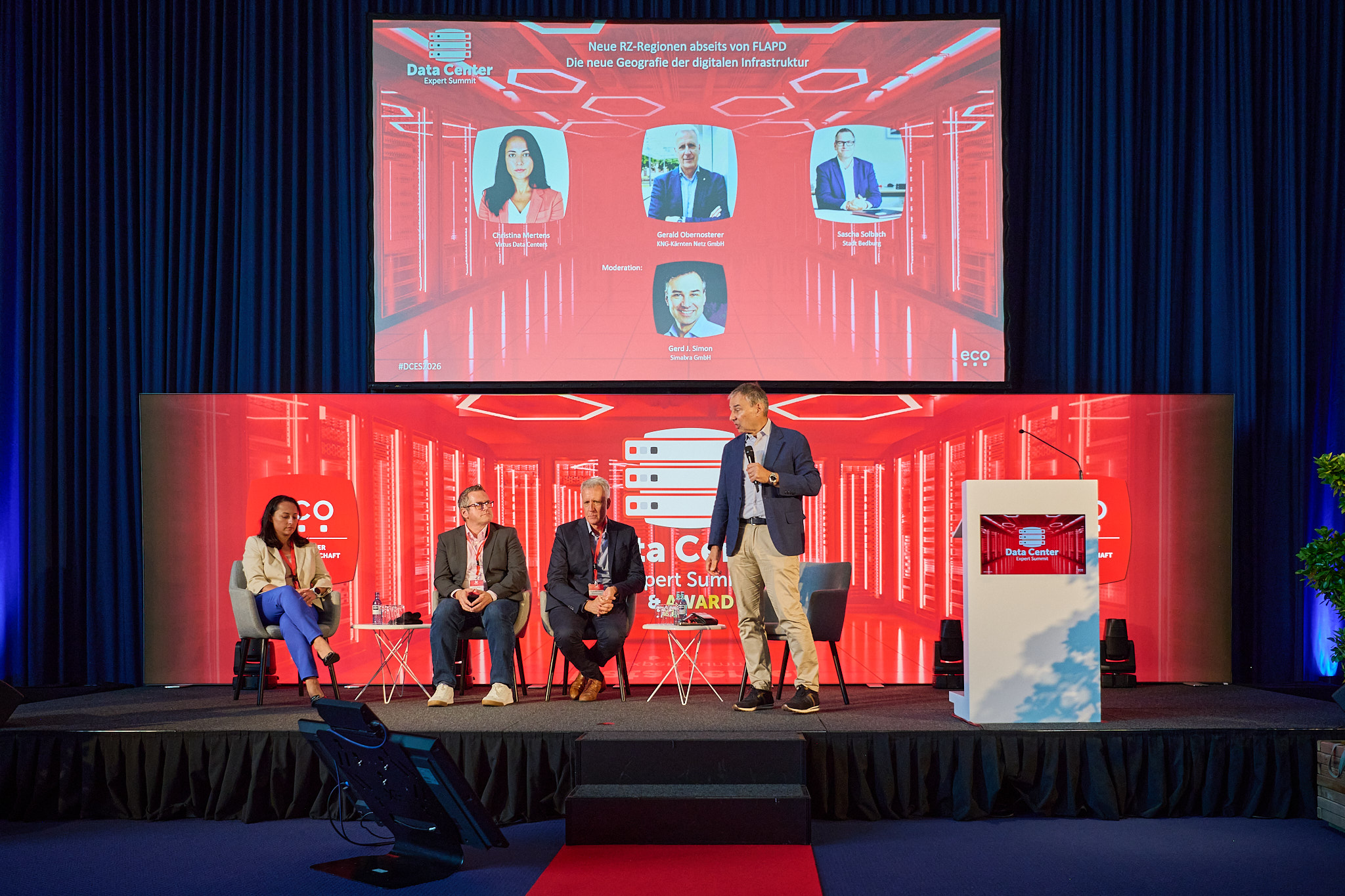
Panel: “New Data Centre regions Beyond FLAPD – The New Geography of Digital Infrastructure” with Christina Mertens (Virtus Data Centres), Sascha Solbach (Mayor of Bedburg) and Geral Obernosterer (KNG-Kärnten Netz GmbH), moderated by Gerd Simon (Simabra).
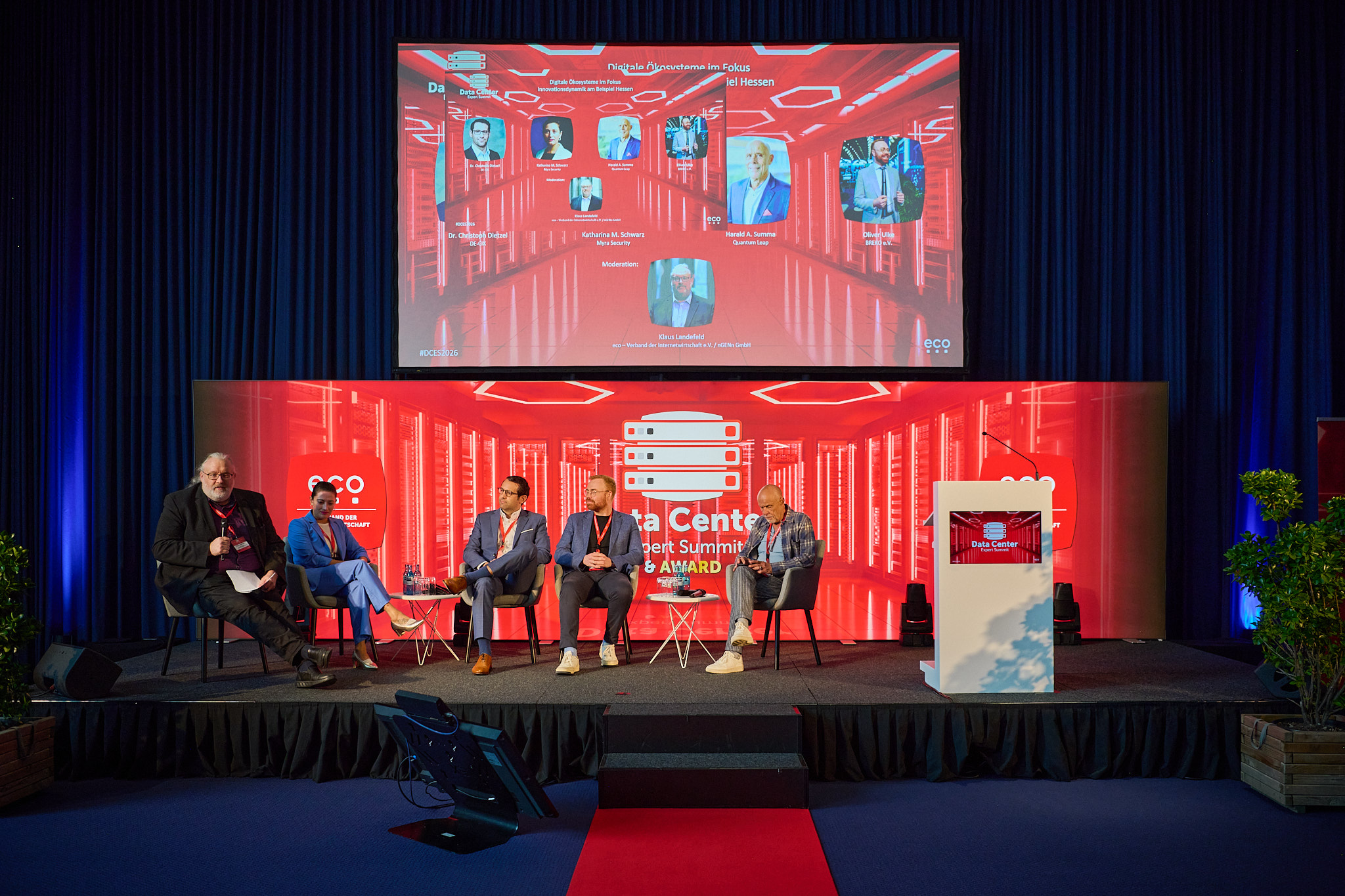
Panel: “Resilient Networks and Connectivity in Uncertain Times – Aspiration and Reality” with Katharina M. Schwarz (Myra Security), Dr Christoph Dietzel (DE-CIX), Oliver Ulke (BREKO e.V.) and Harald A. Summa (Quantum Leap), moderated by Klaus Landefeld (eco).
Resilience, Security and Digital Sovereignty
Another key focus was on the resilience of digital networks. Against the backdrop of growing cyber threats, geopolitical uncertainties and new regulatory requirements, discussions centred on NIS-2, DORA, supply chain security and technical protection mechanisms.
Topics such as advanced blackholing, cryptographic routing validation via RPKI and preparations for the so-called Q-Day made it clear that security must be approached more holistically, from end to end, in future. Digital sovereignty does not begin only with applications or data, but rather with the physical infrastructure and control over networks, locations and supply chains.
Alexander Rabe (eco)
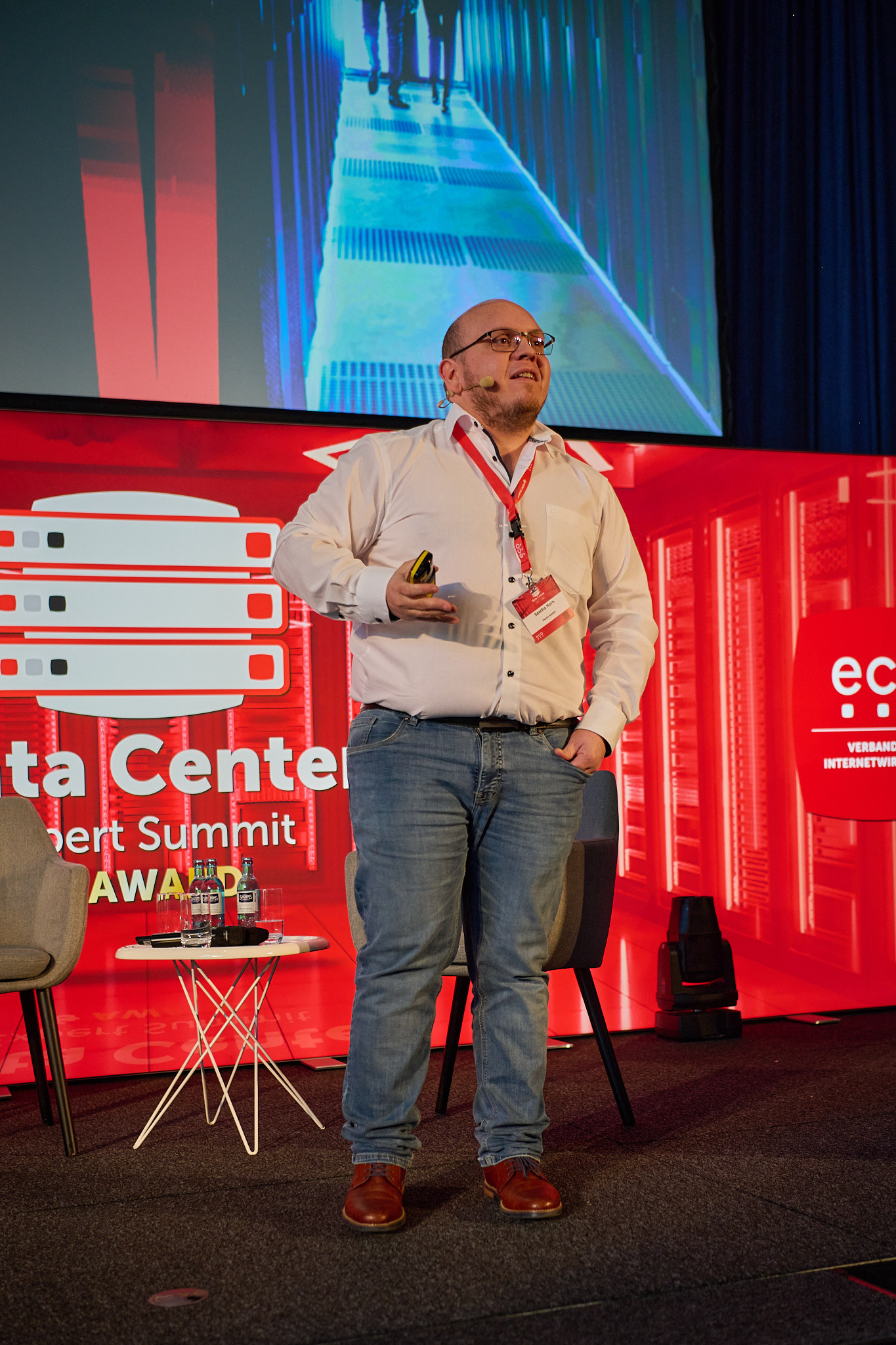
Sascha Horn (Vertiv)
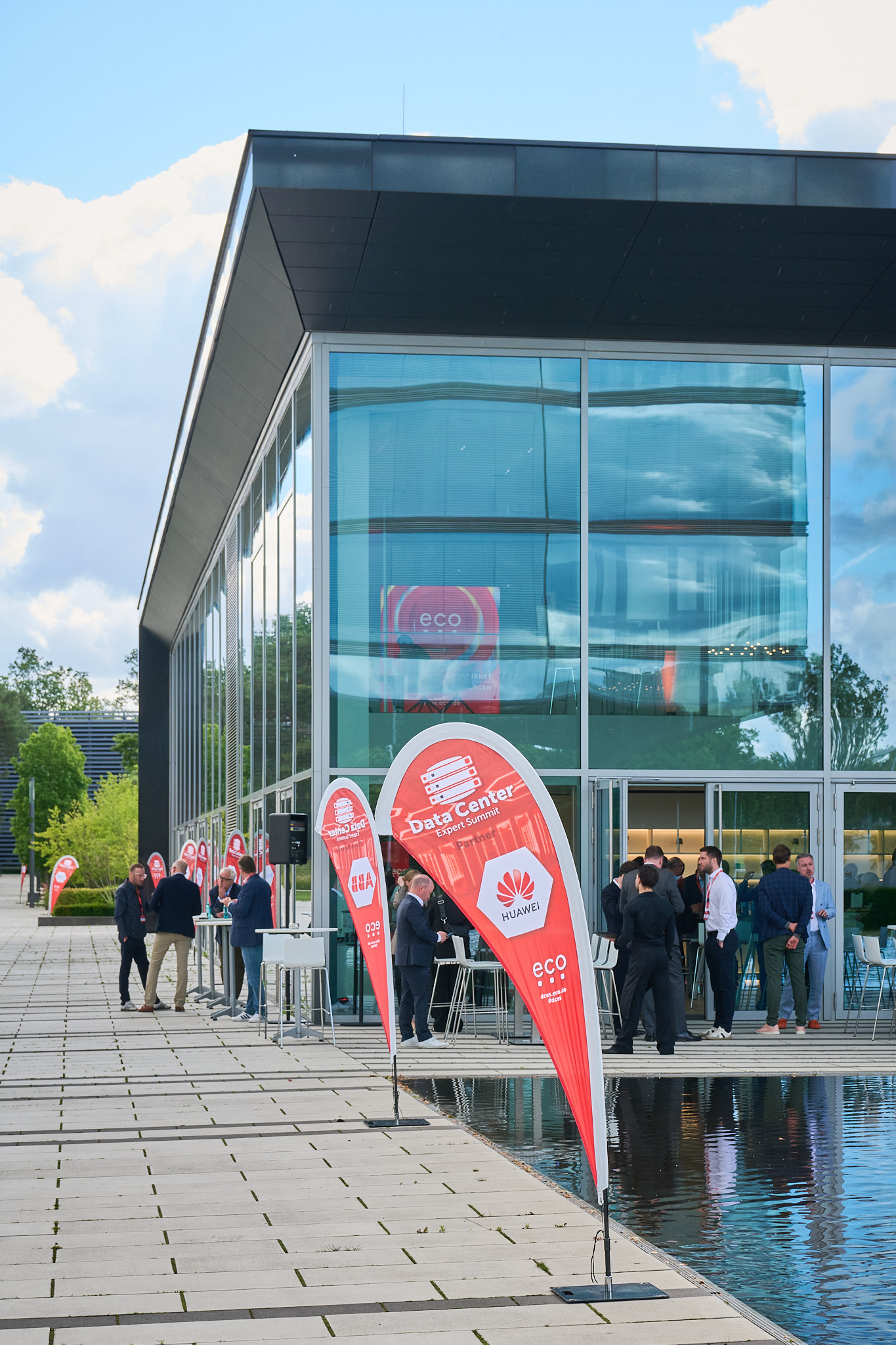
area3 in Dreiech
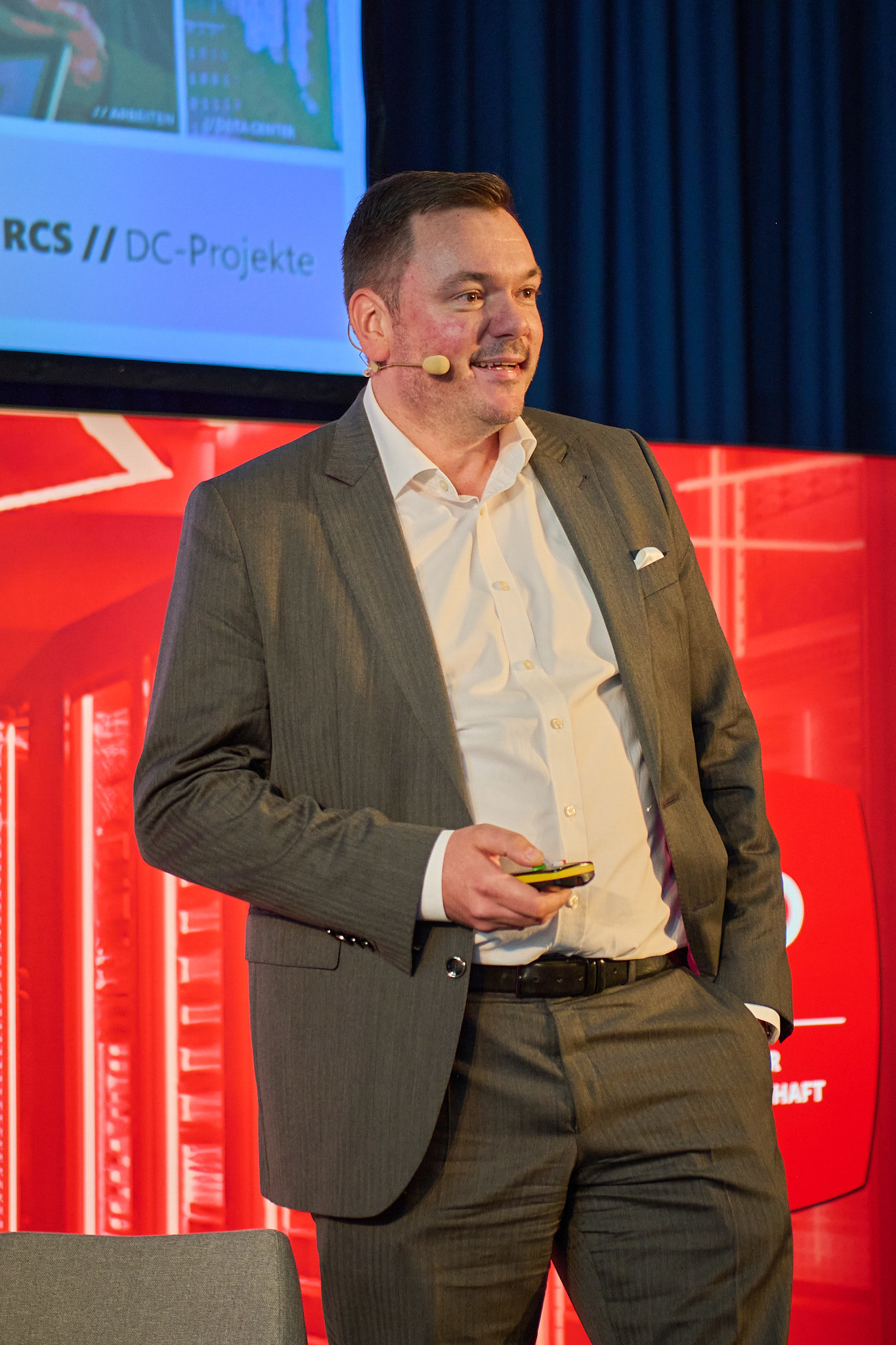
Martin Zunken (Robert C. Spies)
Data centres in the energy and heating system
The role of data centres in the energy transition was another key focus. Discussions centred on approaches to sector coupling, the utilisation of waste heat and making data centres more flexible as active components of local energy systems.
Research projects such as DC2HEAT and ENIPRO demonstrated how AI-supported optimisation, digital twins and intelligent heat networks can help to make better use of waste heat streams. At the same time, practical approaches were presented, including data centres directly connected to wind turbines or green hydrogen fuel cells as an alternative to diesel generators.
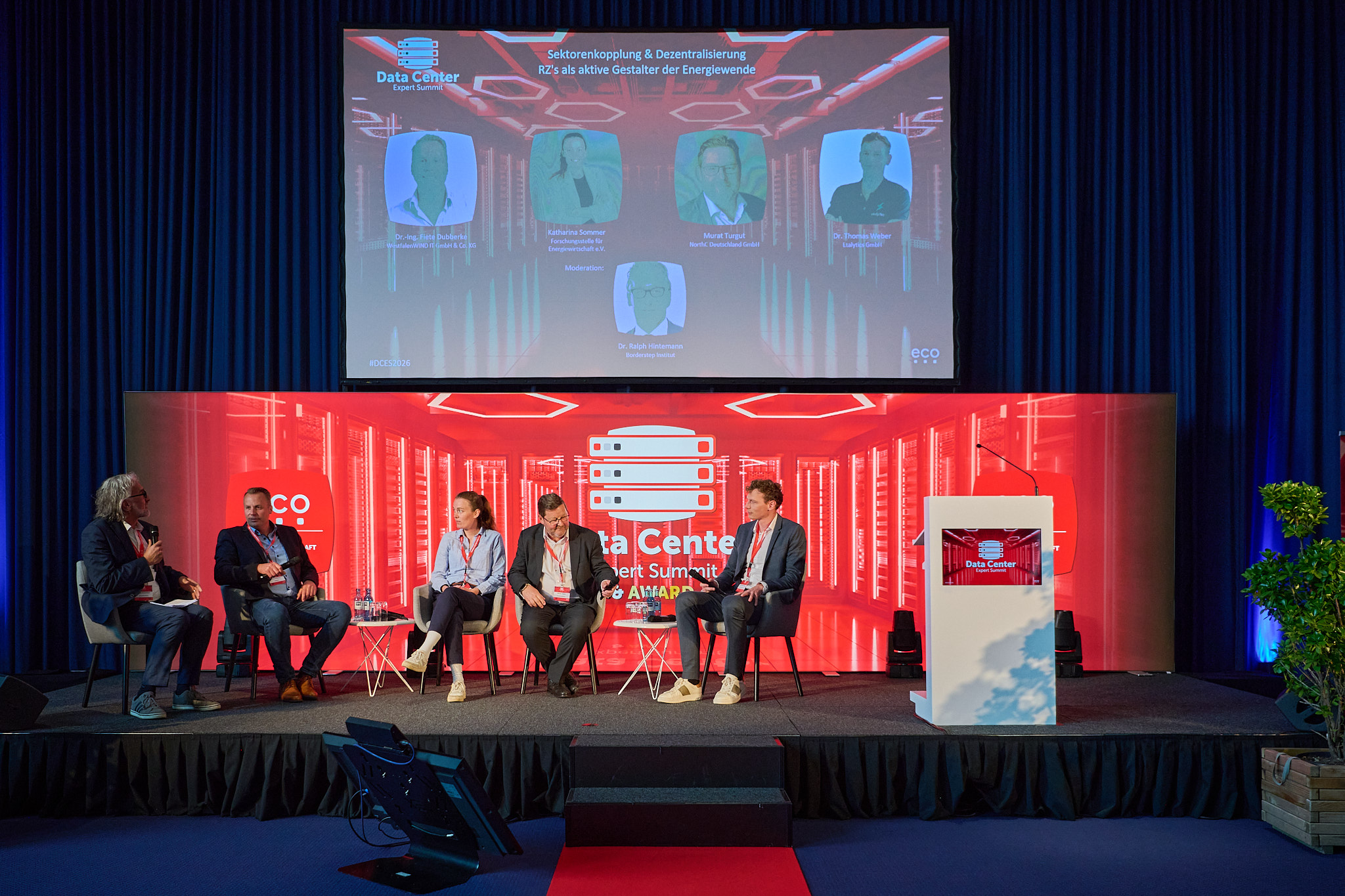
Panel: “Sector Coupling and Decentralisation – Data Centres as Active Shapers of the Energy Transition” with Dr-Ing. Fiete Dubberke (windCORES), Katharina Sommer (FfE e.V.), Murat Turgut (NorthC Datacenters) and Dr Thomas Weber (etalytics), moderated by Ralph Hintemann (Borderstep Institute).
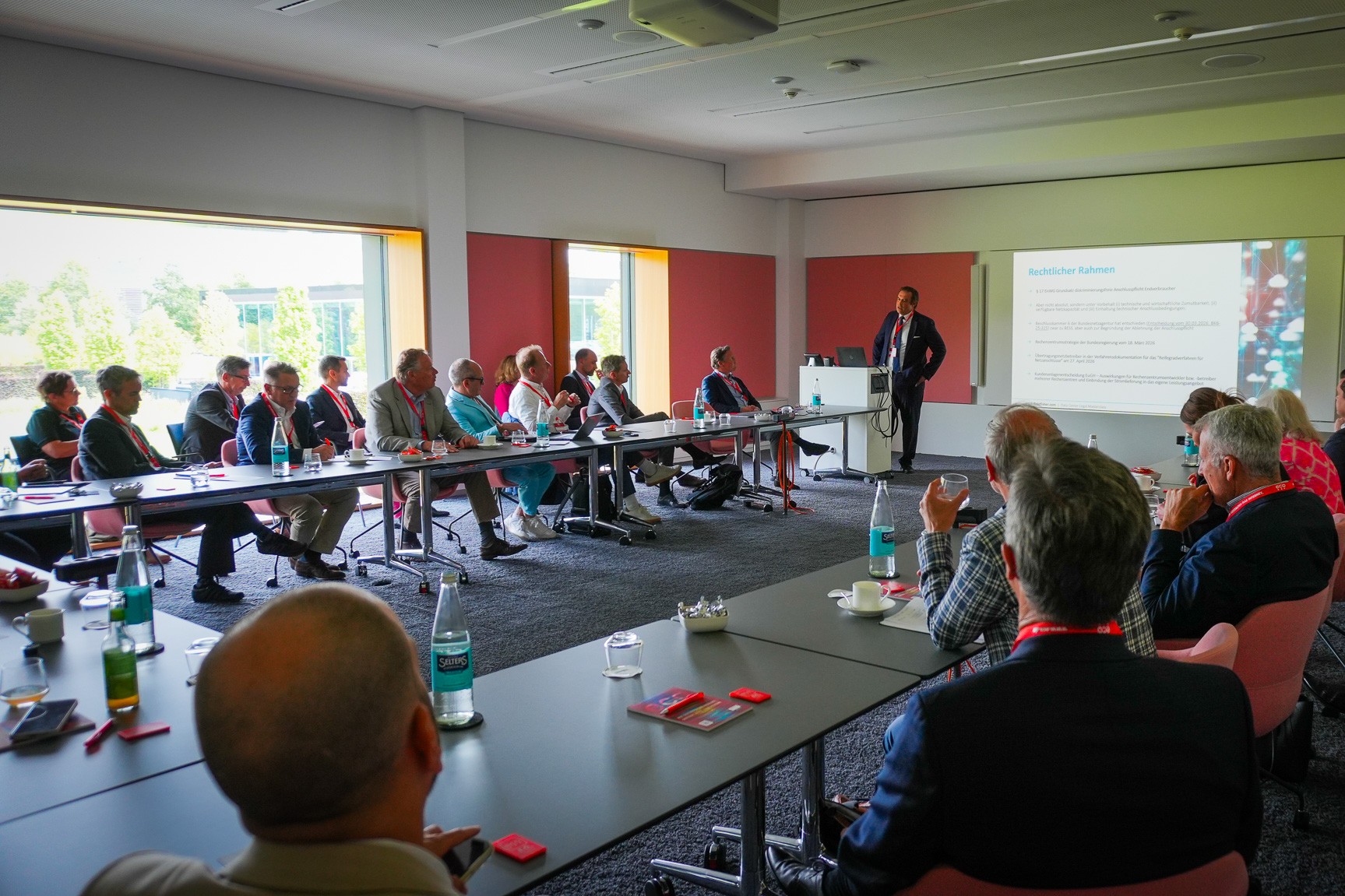
Data Centre Legal Masterclass with Fieldfisher
Legal frameworks and exchange
The eco Data Centre Legal Masterclass had already provided a specialist opening on the previous day. The focus was on legal, regulatory and approval-related issues surrounding data centre locations. In doing so, the Masterclass addressed a topic that also ran throughout the Summit: the expansion of digital infrastructure requires not only technological innovation but also legal clarity, reliable procedures and a coordinated framework of energy and location policies.
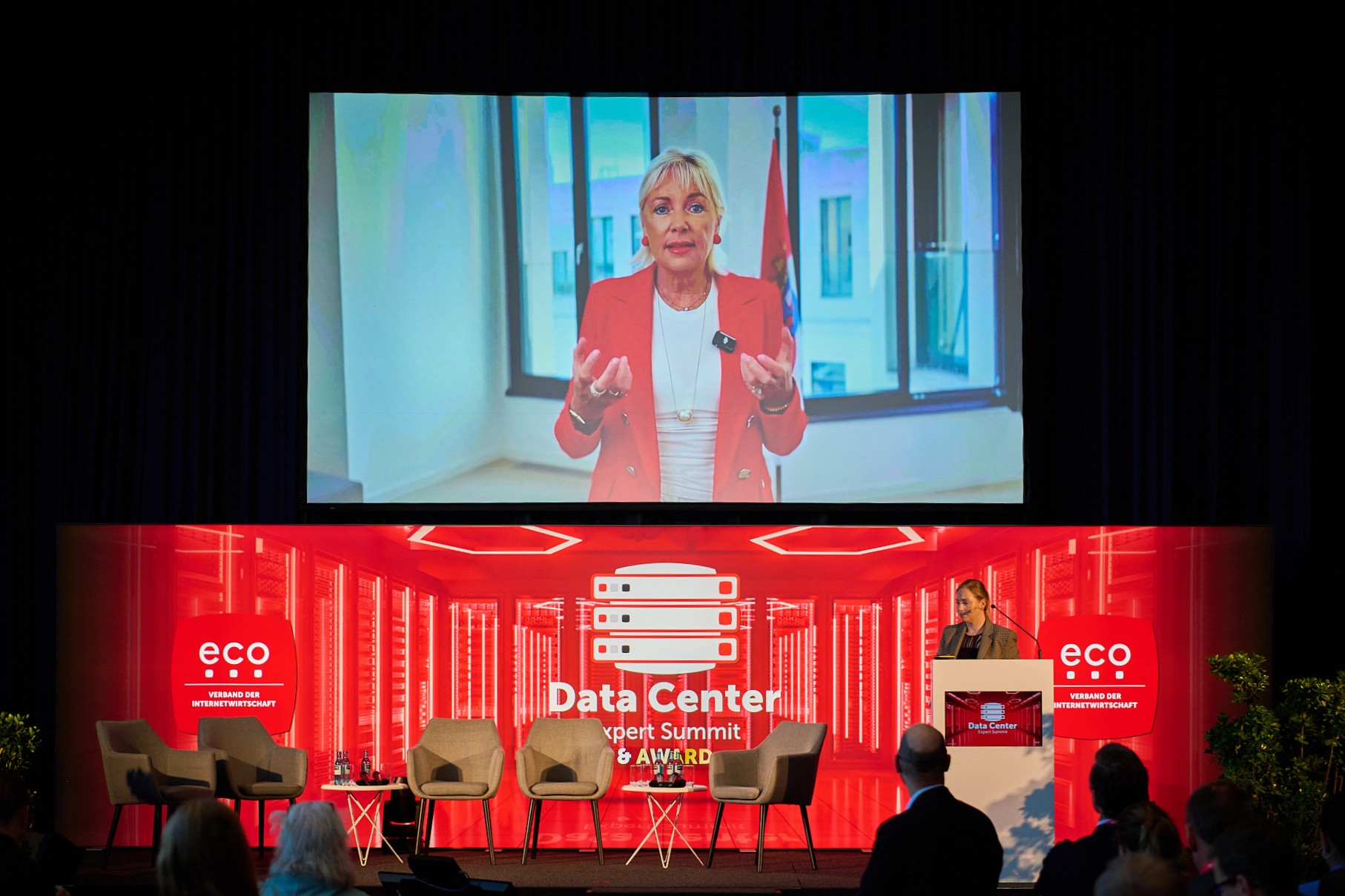
Address by Hesse’s Minister for Digital Affairs, Prof. Dr Kristina Sinemus
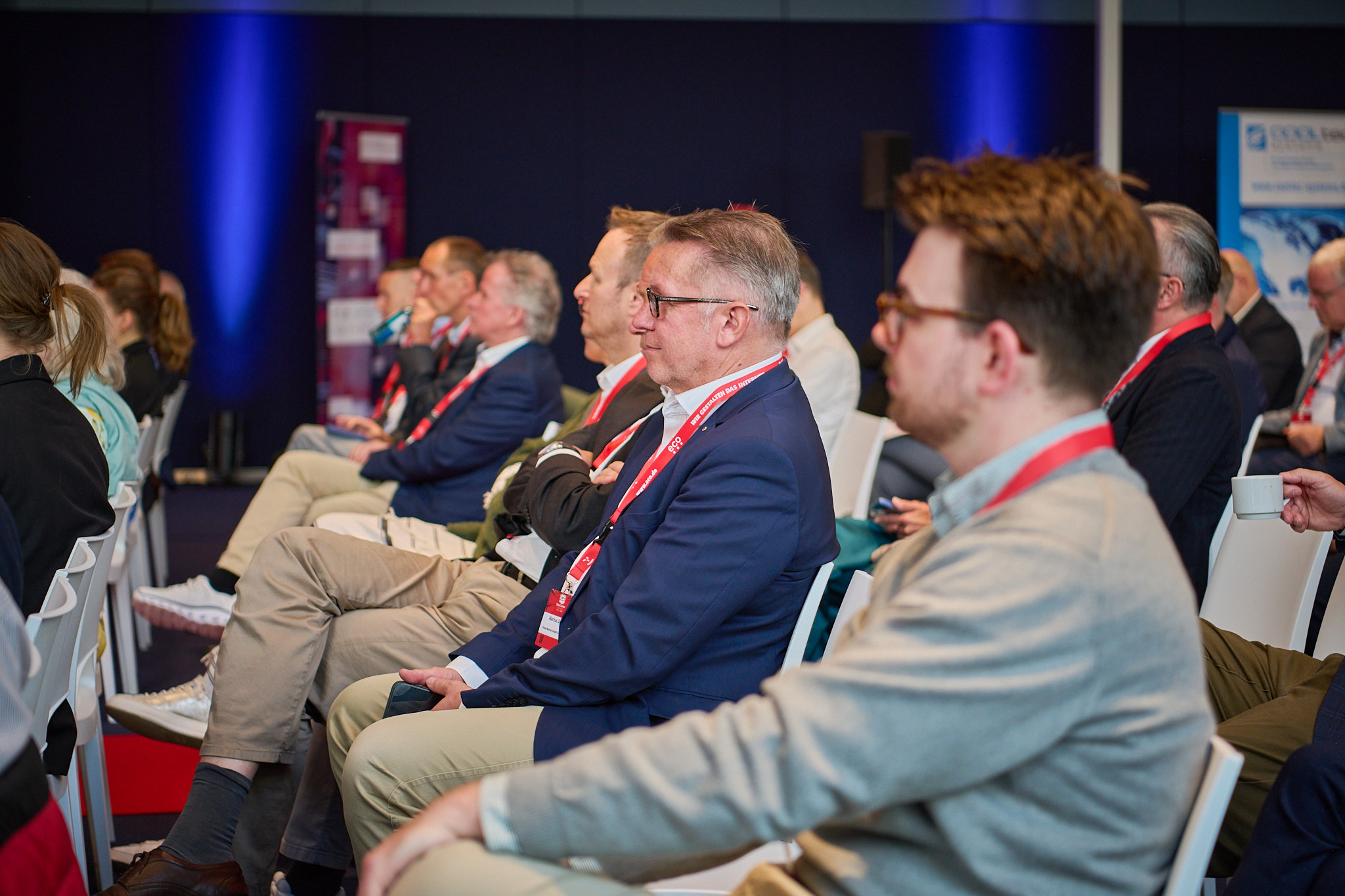
A day full of panel discussions, keynotes and networking
New leadership of the Data Centre Competence Group
DCES 2026: Data centres in focus
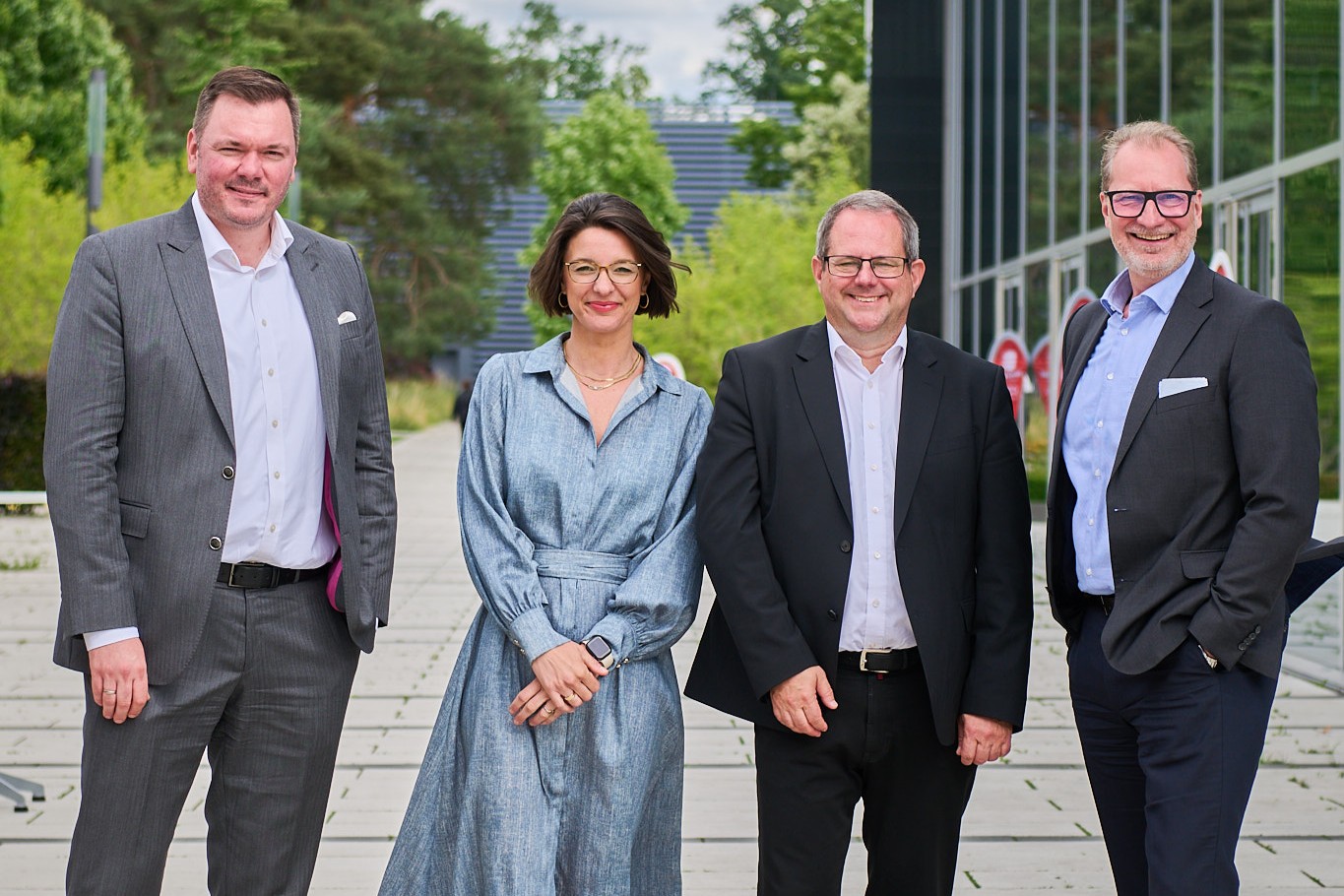
A special moment of the Summit was the recognition of Dr Béla Waldhauser, who has led the eco Data Centre Competence Group since 2009 and has played a decisive role in shaping it over many years. As an expert, bridge-builder and trusted point of contact for the community, he has strengthened dialogue within the data centre sector and advocated for greater visibility of digital infrastructure in society and politics. At the same time, the new leadership of the Data Centre Competence Group was announced: going forward, Joachim Astel, Jens Leuchters, Anne Omar and Martin Zunken will jointly take charge of the Data Centre Competence Group. The new leadership team brings together perspectives from connectivity, operations, physical security, and location and property planning, and will continue the work of the Data Centre Competence Group on a broad professional footing.
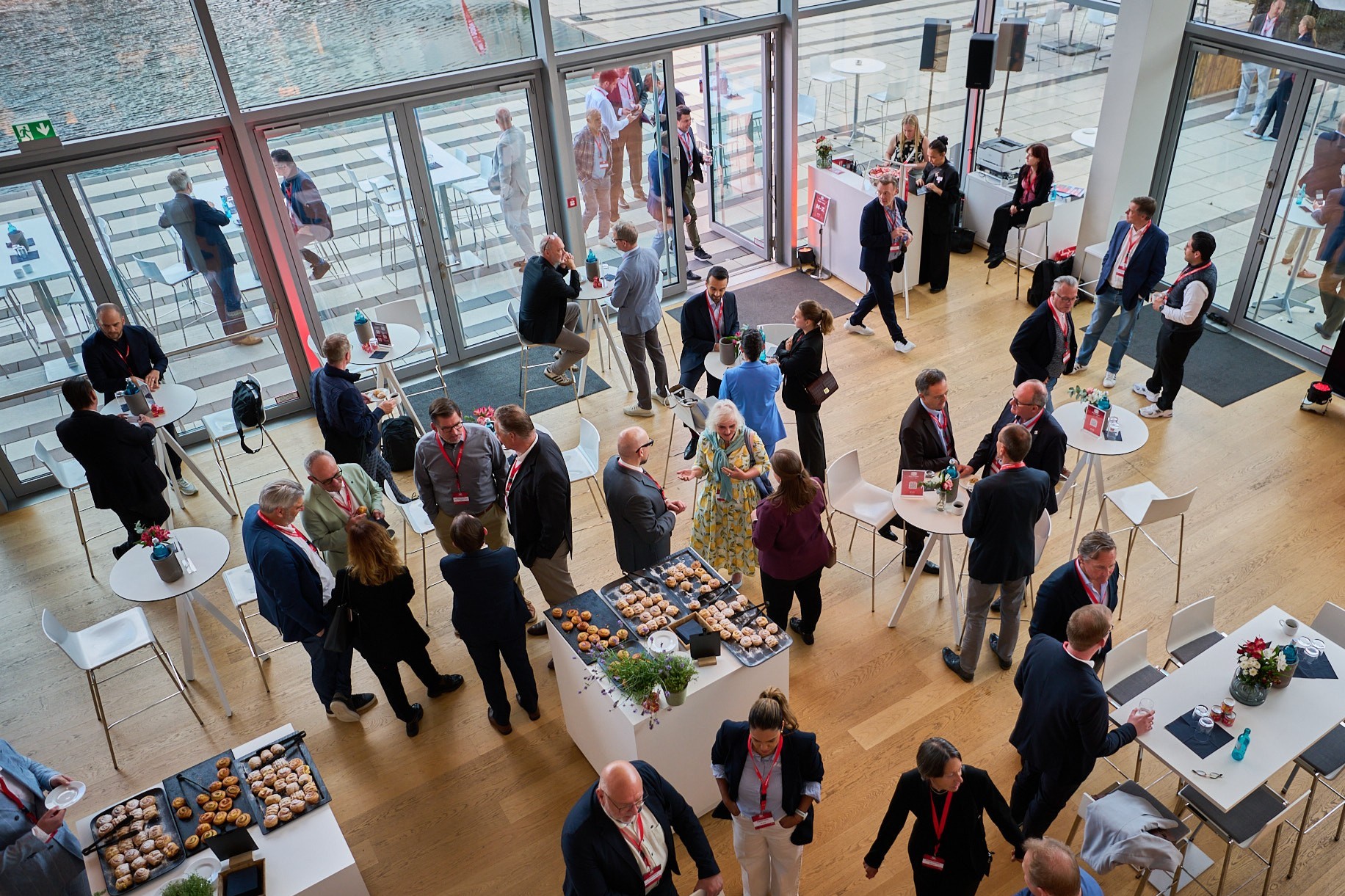
The Data Centre Expert Summit 2026 made it clear that the further development of digital infrastructure is increasingly taking place at the intersection of energy, regulation, location development, security and technology. Data centres are no longer merely individual technical sites, but form part of regional ecosystems, critical networks and municipal energy and heating systems. The programme was complemented by the Data Centre Award, which highlighted projects and approaches from the data centre sector. Face-to-face interaction also played an important role: area3 in Dreieich provided an ideal setting for professional discussions beyond the event itself, with numerous networking opportunities, high-quality catering and live music.
For the further development of the sector, it will be crucial to successfully connect investment, planning certainty, regulatory requirements and infrastructural conditions. The DCES 2026 has provided important professional impetus in this regard and also demonstrated the continuing value of sustained exchange within the industry. eco thanks its strong partners – ABB, Fieldfisher, Huawei, Robert C. Spies, Vertiv, Alliance for the Strengthening of Digital Infrastructures in Germany, Amphenol Sachsenkabel, Cooltec Systems, Global Switch, noris network, NorthC Data Centres and Penta Infra – as well as the media and network partners BREKO (Federal Association for Broadband Communication), Datacenter-Insider, it-daily.net, Tech Show Frankfurt and VIRZ for their cooperation.
Full details of the programme are available here in German. Photos from the eco Data Centre Award can be found here. Images from DCES 2026 are available here.