
Case Study:
Email Security in Practice: The ams OSRAM Case Study
Implement email security successfully
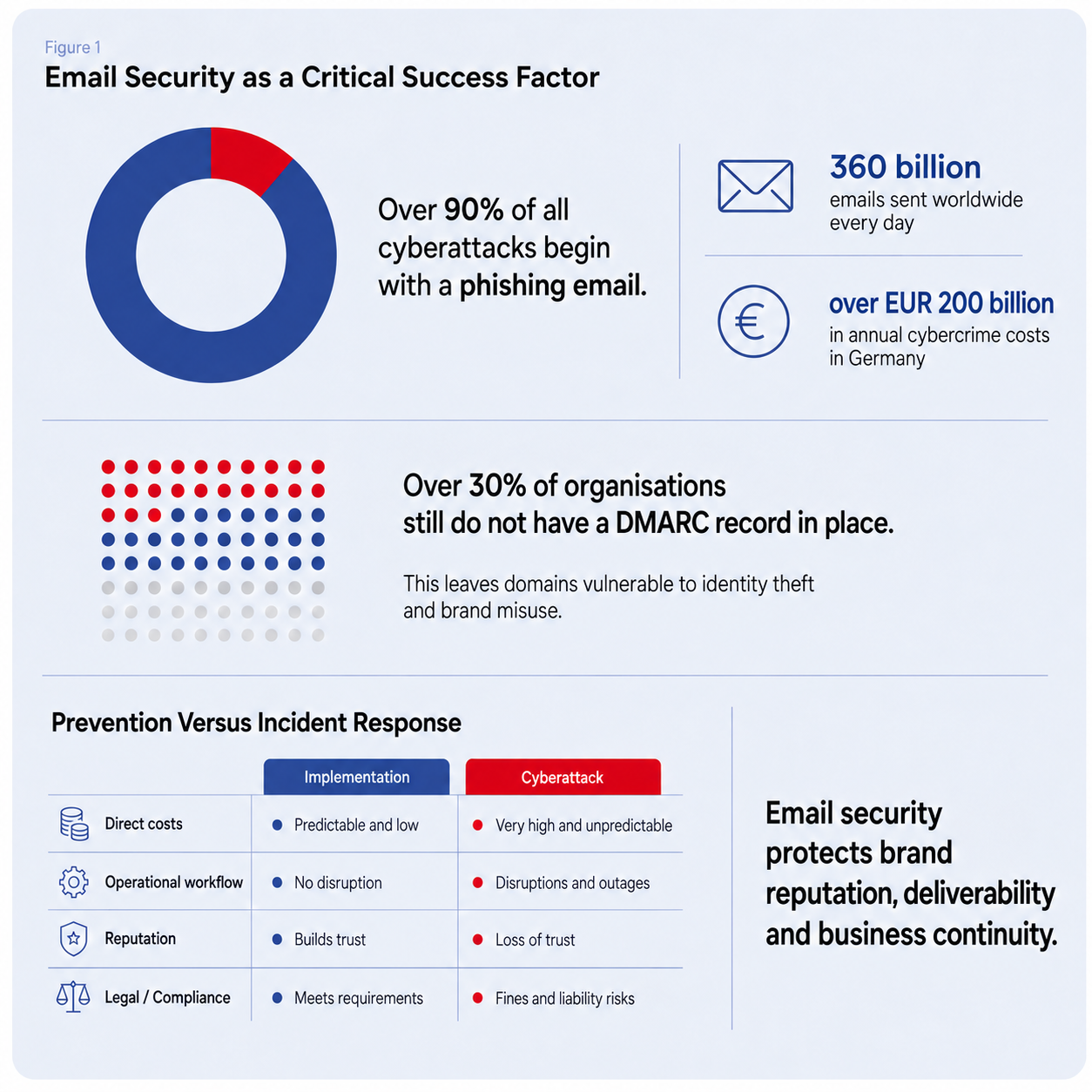
Email remains the most important means of communication in day-to-day business, but it is also one of the most common gateways for cyberattacks.
Before a project begins, there is often no complete overview of all email sending sources, while individual domains may not be adequately protected by SPF, DKIM or DMARC, potentially enabling spoofing attempts. Fraudulent emails increase the workload for support teams and may adversely affect the deliverability of legitimate messages. At the same time, security and compliance requirements are increasing as a result of standards and regulatory provisions.
Objectives of the case study
The case study aimed to protect the companyâs digital identity in the long term and make its email communications more secure.
The key objectives were:
- Protecting the brand identity against phishing and spoofing
- Improving email deliverability to customers and partners
- Ensuring transparency regarding all legitimate and illegitimate email sending sources
- Meeting current security and compliance requirements
âEmail security is one of the fundamental protective measures. With just a few settings, we can all achieve a significant improvement for everyone by making email more traceable and thereby considerably reducing spam, fraud and phishing â without having to spend a single Euro on a tool! This case study describes the specific steps that every company can take.â
The three core technologies covered in the case study
-
SPF (Sender Policy Framework)
-
DKIM (DomainKeys Identified Mail)
-
DMARC (Domain-based Message Authentication, Reporting and Conformance)
With the kind support of