eco calls for clear responsibilities, a coherent legal framework and the avoidance of duplicate regulation wherever possible
The European Commission intends to officially present its draft “EU Kids Act” tomorrow, Thursday. Initial details of the planned EU rules to strengthen the protection of children and young people online are already available.
eco – Association of the Internet Industry generally regards the European approach as an important step. At the same time, the association warns that the new standalone legal act could lead to duplicate regulation, with unclear responsibilities and requirements for companies. Specifically, the association sees a risk of overlap with the Digital Services Act (DSA), the AVMS Directive and the planned Digital Fairness Act (DFA).
The protection of minors in the media must strike a balance between participation, protection and empowerment. With regard to young people’s digital participation, a low age threshold is important in the debate on a statutory minimum age. At the same time, effective and age-appropriate safeguards are needed, as well as measures to empower children and young people to use digital services safely and independently.
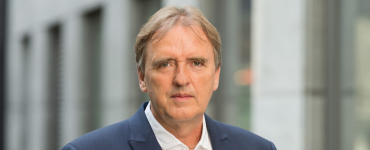
“Effective protection of minors in the media must not rely solely on bans and age limits. Children and young people must be protected while also being empowered to navigate the digital world safely and independently. And they need access to digital services,” says Alexandra Koch-Skiba, Head of the eco Complaints Office. “From the perspective of digital participation, there is therefore a strong case for setting the age threshold as low as possible if a statutory minimum age is introduced, combined with effective and age-appropriate safeguards.”
Ensuring Coherence with the Existing EU Legal Framewor
A standalone EU Kids Act would create tensions with existing or planned European legislation, such as the DSA, the AVMS Directive and the DFA. From eco’s perspective, particular attention should therefore be paid to the coherence of the European legal framework as the legislative process progresses. If the EU Kids Act is introduced, it must be clear from the outset how it fits into the existing legal framework, where responsibilities lie and how they interact.
“The protection of children and young people is an important European task. At the same time, the European legal framework must not become increasingly complex by requiring several laws to be taken into account for a single set of issues, with potentially differing responsibilities,” says Koch-Skiba. “Duplicate regulation and duplicate oversight could have been avoided by adjusting the relevant provisions of the DSA, such as Article 28.”
Age Verification: Preserving Choice
Based on the information available so far, the technical implementation of age limits appears likely to allow different options for age verification.
From eco’s perspective, it is crucial that these procedures are effective, proportionate and privacy-friendly. “When it comes to age verification, Europe should establish common requirements for the level of protection without prescribing individual technical methods. Different solutions can enable innovation and practical implementation – provided they meet clear requirements for data protection, security and reliability,” says Koch-Skiba.
For eco, the priority now is to carefully examine the European Commission’s specific proposal. The key question will be how the minimum age, safeguards, age verification and exemptions for services suitable for children interact, and how the new legal act will be integrated into the existing European regulatory framework.
To support its call, eco has published its latest information paper here, highlighting the consequences of differing national regulations and the risk of an emerging patchwork of rules across Europe.
About the eco Complaints Office
The eco Complaints Office has been active since 1996 and is an integral part of the system of regulated self-regulation in Germany. It enables Internet users to report content harmful to young people and criminal offences free of charge and anonymously, and works closely with providers, public authorities and international partners.
To mark its 30th anniversary, we are pleased to offer interested media representatives background briefings and in-depth insights into the work of the eco Complaints Office in Cologne.