The German federal government is stepping up its efforts in the combatting of digital violence, responding to growing political and societal pressure to tackle hate speech, deepfakes and violations of personal rights online more effectively. With the draft act for a law to strengthen civil and criminal law protection against digital violence, the German federal government is responding to new challenges. eco – Association of the Internet Industry welcomes the initiative by the German Federal Ministry of Justice and Consumer Protection (BMJV) in principle – but warns that new powers of intervention must only be implemented with clear constitutional safeguards and practical guidelines. Existing regulations such as the DSA would need to be supplemented in order to create uniform rules across Europe.
The current draft act provides, among other things, for extended rights to information from platforms, court-ordered account suspensions and new criminal offences relating to deepfakes.
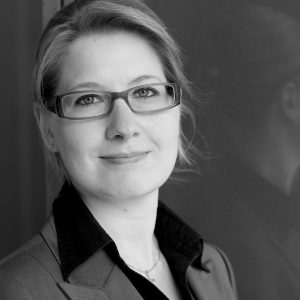
“Victims of digital violence must be protected more quickly and effectively – particularly in view of the increasing prevalence of manipulative AI content and sexualised deepfakes,” says Alexandra Koch-Skiba. “At the same time, clear legal safeguards are needed so that platforms and service providers are not forced into legal uncertainty by having to navigate between data protection, liability risks and unclear legal concepts.”
Judicial review creates legal certainty
eco views the proposed requirement for judicial review in the disclosure of sensitive user data particularly positively. This creates legal certainty for those affected as well as for service providers and sends an important signal regarding the proportionate handling of personal data.
However, the association is critical of the risk of conflicting regulations in conjunction with European requirements such as the Digital Services Act (DSA), as many criminal offences are already regulated. What eco would not welcome are inconsistent dual regulations. The planned provisions for account suspension and new criminal offences would also need to be defined more precisely in order to avoid legal uncertainty and so-called ‘overblocking’ of lawful content.
“If platforms delete too much content out of fear of liability risks, freedom of expression, satire and journalistic content can quickly come under pressure,” Koch-Skiba continued. “Particularly in the current political climate, Germany needs a strong yet balanced regulatory framework for the digital space.” The association therefore calls in particular for the following during the further legislative process:
- clear and legally certain definitions of new criminal offences,
- close alignment with existing EU law, particularly the DSA,
- standardised and efficient procedures for data requests to service providers and providers of Internet access services,
- appropriate compensation for the additional costs incurred by service providers and providers of Internet access services,
- as well as greater investment in media literacy and prevention.
Media literacy as the key to combatting digital violence
From eco’s perspective, digital violence cannot be combated in the long term through criminal law alone. In addition to consistent law enforcement, what is needed above all is societal awareness and digital education to counteract manipulation and abuse at an early stage.
“The fight against digital violence is not decided solely in court, but also every day in schools, through media education and the responsible use of digital technologies,” emphasises Koch-Skiba.
About the eco Complaints Office
The eco Complaints Office has been active since 1996 and is an integral part of the system of regulated self-regulation in Germany. It enables Internet users to report content harmful to young people and criminal content free of charge and anonymously and works closely with providers, public authorities and international partners.
To mark its 30th anniversary, we are pleased to offer interested media representatives background briefings as well as in-depth insights into the work of the eco Complaints Office in Cologne.